

Fiber Cement Board Stacker: When a Finished Stack Becomes the Production Bottleneck

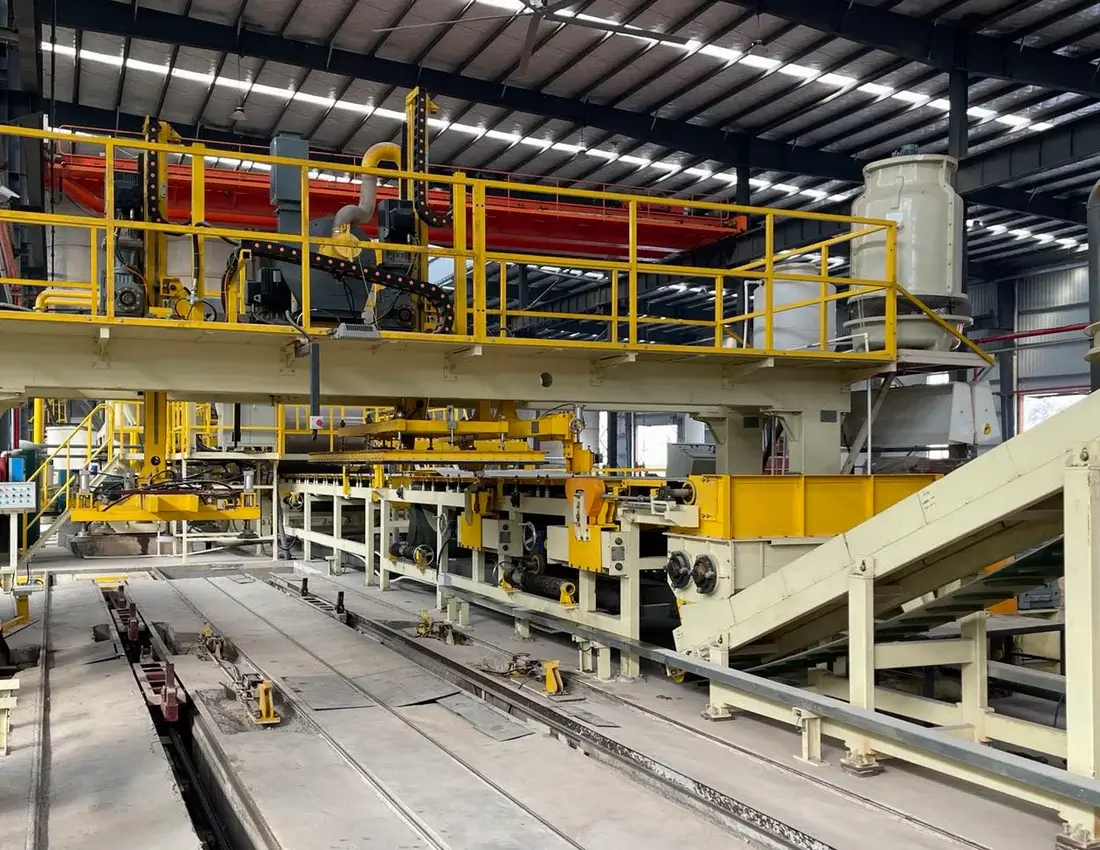
A Fiber Cement Board Stacker is the machine that turns individually handled green sheets into an organized load for the next operation. The buyer’s central question is not only how quickly the stacker moves: it is whether a wet board arriving from cutting can be positioned and supported without damage, while the following process is ready to receive the completed stack. Zhonghong lists a servo-controlled Board Stacker alongside a high-pressure Waterjet Cutting System, Hatschek and Flow-on forming machines, a Hydraulic Press and other handling equipment. A production manager can begin with those documented board-forming machines, but the precise pickup arrangement, board formats and stack pattern of an ordered stacker need confirmation from its project drawings.
Consider a factory where wet boards are formed and cut successfully, yet output slows whenever the stacker completes a load. A second factory may report edge damage only when a longer sheet enters the stacker. The first problem suggests a timing or transfer bottleneck; the second may involve board support or product changeover. Buying a stacker with a higher advertised movement rate will not necessarily solve either without understanding the surrounding line.
What happens between the waterjet cutter and the first stack?
Green-board formation and green-board handling belong to a connected process but have different roles. A Hatschek former builds up fibre-cement layers into a fresh sheet; a Flow-on former distributes and dewaters slurry into a continuous layer. Zhonghong’s Waterjet Cutting System then sizes green material before downstream movement. The stacker receives the individual board, not an abstract machine cycle. The supplier must know its dimensions, wet condition and support requirements.
A cut board cannot be treated as a finished rigid panel
The sheet at the stacker has not necessarily completed pressing or curing. It may therefore respond differently to lifting and support than a sheet leaving finishing. A trial should identify the product’s actual green-board condition and demonstrate how it moves through the stacker without unacceptable bending or other damage. Industry process descriptions show the use of supported or vacuum-assisted green-sheet handling in some production systems, but those examples do not prove the exact pickup head fitted to a Zhonghong machine.
Suppose a distributor asks the plant to introduce a longer board. A cutter may successfully change the cut position, yet the stacker must still support the newly sized material. A useful engineering review asks what changes in the receiving position, support pattern and discharge path. These decisions should be represented in the supplier’s drawings rather than left as an assumption that any servo-controlled device accepts every board dimension.
The cutoff and the stacker must agree on the release condition
A continuous wet sheet becomes individual material at the waterjet operation. The stacker needs a clear signal or operating condition indicating that a board is ready for pickup or placement. The cutter also needs to know when downstream handling cannot receive another board. A line that lacks this coordination can produce waiting material at an unsuitable location, even when each machine meets its individual mechanical specification.
Zhonghong describes Intelligent Line Control Systems and Electrical Control Cabinets for coordinating production equipment. The buyer should determine whether the stacker and cutter are supplied as one integrated package or connect to an existing control system. Having a programmable controller somewhere on the line does not prove that the required cut-to-stack handshake, alarms or recovery steps are already included in a particular machine order.
Servo positioning is a machine feature; a usable stack is a process result
The Board Stacker’s documented servo-controlled positioning is relevant to repeatability of movement. It is not enough to establish how the machine supports a specific wet sheet, determines a completed load or delivers material to the next station. The buyer should ask the supplier to demonstrate the full material route for the planned board rather than accept a catalogue claim that the machine stacks accurately.
Define the stack against the receiving operation, not a convenient demonstration
Stacks may be prepared for a subsequent pressing, mould-plate handling or curing arrangement according to the product process. The buyer should specify what the following station expects: a board, a group of boards, a plate or another defined load. If the receiving machine cannot accept the stack the equipment makes, the operation is incomplete despite accurate positioning during the cycle.
A factory preparing for a higher-density product should examine whether the offered Hydraulic Press belongs in its process and how a stack would enter it. That press is a separate Zhonghong equipment family and is not a mandatory component of every board stacker installation. The relevant product trials should determine the correct arrangement. A supplier should not add a press merely to fill out a turnkey equipment list.
When two board formats share a line, the loading route may change
A plant with only one commercial board size may be able to optimize its handling arrangement around that format. A business supplying contractors and distributors might have a wider mix of lengths or thicknesses. The difference affects the operating sequence and possibly the support or receiving configuration. Any claimed adjustable range must come from the actual supplier’s machine specification and demonstration.
The buyer should distinguish the first product that will be sold from variants that are only future possibilities. It is better to prove reliable stacking for a defined launch sheet before building an unnecessarily complicated handling system around untested sizes. If a changeover is commercially important, it should be included as a separate acceptance trial, with the process adjustments recorded.
| Material handoff | What the operating team must know | Why it affects stacking |
|---|---|---|
| Forming to cutting | Actual wet-sheet condition and planned width | Determines whether the cut board can remain supported |
| Cutting to stacker | Cut completion and receiving readiness | Prevents a board arriving when pickup is unavailable |
| Stacker to next station | Completed load and discharge destination | Avoids building a stack that the following machine cannot accept |
| Stopped station to restart | Location of boards already in movement | Reduces uncertainty during an interrupted production run |
Where the stacker fits relative to pressing and mould-plate stripping
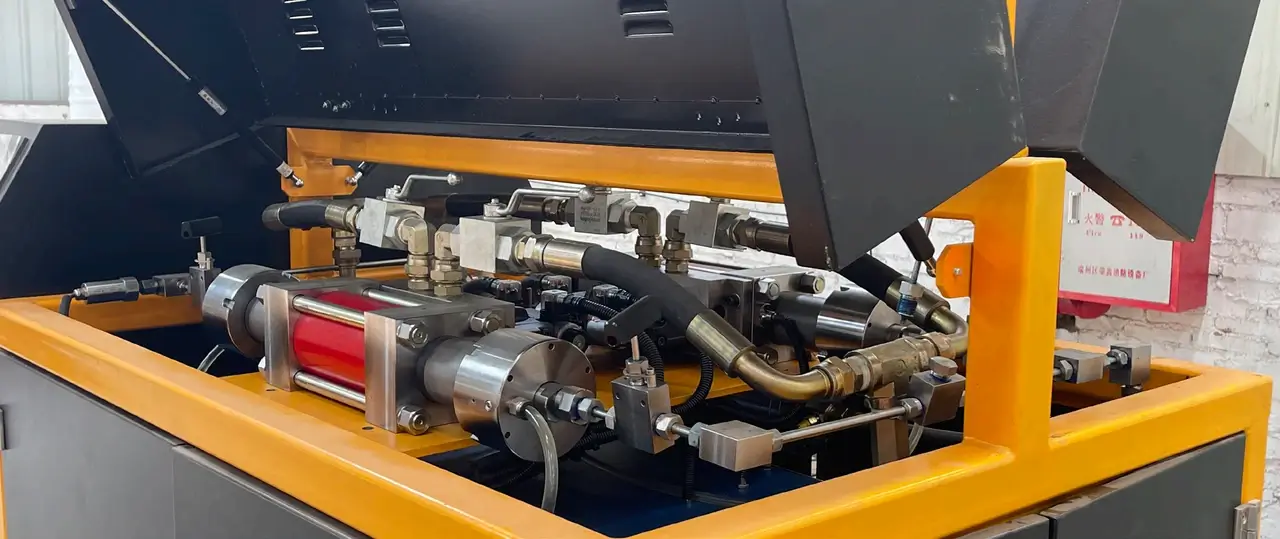
Zhonghong lists a Hydraulic Press for selected higher-density board routes and a Stripping Machine that separates boards from mould plates using suction lifting and servo-controlled travel. The Board Stacker positions green boards, but does not automatically perform those other operations. A plant process diagram should identify which of these stages are required for the selected product and how the stacker’s output reaches them.
A press is justified by the board product, not by the stacker model
If pressing is part of the intended product route, the supplier needs to explain what the prepared stack looks like, how it enters the press and which station receives it afterward. The customer should not assume an arbitrary press capacity or guaranteed board density from the presence of a stacker. The equipment page identifies pressing as a function for certain products; actual process values require project-specific testing and documentation.
Consider an established factory replacing an old stacker while keeping its press. The new machine may need to match the retained loading or transfer arrangement even if its own servo movement is more precise. The supplier should receive the press interface drawings and board schedule before fabrication. An installation whose mechanical parts fit but whose discharge timing is incompatible may still interrupt production.
Mould-plate stripping and load stacking are separate tasks
The Stripping Machine addresses separation of a board from its mould plate. Its suction and movement functions should not be confused with positioning incoming green boards into a stack. If the production route uses both stations, the material path should show when the plate is present, when it is removed and where each stream continues. Missing this boundary can lead to incomplete machinery quotations.
A factory owner buying only the stacker should establish whether existing plate-handling equipment will remain and whether its operating conditions affect the proposed stacker. The mould-plate separation article examines that later routing decision in more detail. It is a different purchase from improving the accuracy and reliability of green-board positioning.
Why green-board stacks should be tested during stops, not only steady running
Factories rarely operate forever at one uninterrupted pace. An upstream material feed can pause, a cut board can be delayed, or a downstream transfer can become unavailable. A stacker must have a defined response to these conditions, and operators should understand what material remains inside the machine. This is part of evaluating the installation, not an optional software detail.
A finished stack that cannot leave the station is still a bottleneck
Imagine the receiving trolley or other downstream station is temporarily unavailable. The stacker can complete a load but cannot discharge it. The upstream cutter should then respond according to a safe agreed sequence rather than continue delivering green boards into an occupied handling space. The control narrative should identify which stop signals and recovery steps are included in the proposed system.
Zhonghong offers a Shuttle Car for transferring board or mould-plate trolleys and Roller Conveyors for linking production stages. Neither is inherently part of every stacker package. A buyer should identify whether the project includes these transfer systems and who is responsible for their interfaces. A catalogue that lists all these machines does not settle which are required for one plant.
Control logic should show operators the state of the material
An intelligent production line may display station status and coordinate PLC functions, but a useful operator response depends on what those signals mean for actual wet boards. Staff need to know if a cut board is waiting, if a stack is complete and if the discharge destination is ready. The supplier should explain which observations are available and which actions are automated or require intervention.
For a retrofit, the existing controls may not share the same operating logic as the new stacker. The engineering team needs to identify which signals can be exchanged and what must change in the retained equipment. Before shipment, the buyer should know who supplies field wiring, site modifications and the integrated commissioning test. Those responsibilities belong in the contract, not in an assumption that all automatic equipment will communicate correctly.
A stacker supplier should be able to prove the board path before handover
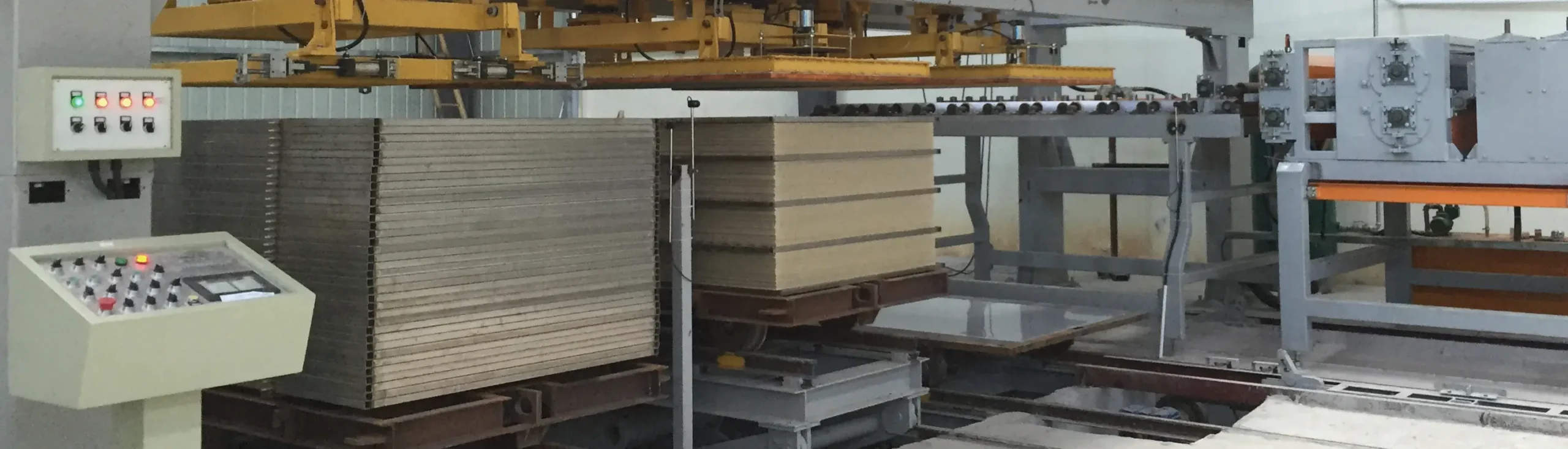
A useful factory inspection establishes the machine components and relevant mechanical or electrical functions. A site trial using the intended wet boards establishes whether the supplied equipment actually stacks them into the required load under the installed conditions. The buyer should distinguish the two, particularly if the stacker is being installed between machines supplied by different vendors.
Inspection drawings should identify what is included in the stacker package
Request the agreed drawing, equipment identity, supported product range, controls description and maintenance access information. The current Zhonghong pages do not publish one fixed stacking cycle, lifting load, suction specification or spare-part replacement interval for all equipment. If a supplier proposes those figures, they should be part of an actual offer that can be checked against a trial. Do not fill the gap with another manufacturer’s model information.
Shipping and installation also need project-specific documentation. A tall gantry or mechanical frame may be transported differently from a separate electrical cabinet. The owner should know what arrives assembled, what must be erected and what services are needed at the site. Zhonghong describes manufacturing, automation, installation and training as service categories, but the contractual scope for a single stacker must identify the work that applies.
Make the first accepted stack the operational milestone
For a new factory, the trial should follow a board from the selected former through wet cutting, positioning and the destination that receives the finished stack. For an equipment replacement, the same trial must include the retained cutter and downstream equipment. Both should demonstrate the planned commercial board, not an unspecified sample chosen only for ease of handling.
The green-sheet cutting guide explains the upstream delivery requirement, and the production equipment analysis addresses output delays that can shift between stations. Zhonghong’s equipment directory provides the machinery categories to compare. A useful stacker quotation then translates those relationships into a working load and testable station sequence.
The decision to purchase a stacker should rest on one reproducible result: the specified green board is placed without unacceptable damage, the completed load can move onward, and the production team knows how the station behaves when a transfer stops. Those are the operating facts that matter after the machinery delivery has been signed off.