


Fiber Cement Board Cutting Machine: Finding the True Cause of Dimension Errors


A Fiber Cement Board Cutting Machine is the appropriate purchase when the factory needs to establish final dimensions on boards that have completed the required curing process. It is not the same as a waterjet unit used to size a fresh green sheet immediately after forming. Buyers should first identify which dimensions are established at the wet end, the cured board’s condition at the cutter inlet, the sizes customers will actually order and the inspection method for finished edges. Zhonghong lists a post-curing Board Cutting Machine in its finishing equipment range, along with a Sanding Machine, Grinding & Chamfering Machine, Roller Conveyor and the earlier high-pressure Waterjet Cutting System. These distinct equipment functions are the basis for specifying a finished-board cutting station, rather than asking one machine to resolve every dimensional problem in the plant.
An investor supplying standardized wall panels may want a reliable final cut for a limited range of lengths and widths. A board distributor commissioning its own finishing operation may need several sizes from the same cured stock sheets. The first buyer is making a production-line decision; the second is making a product-conversion and changeover decision. A cutter can meet both kinds of requirements only if its real machine configuration and handling route have been evaluated against the expected board mix.
Locate the dimensional error before selecting the cured-board cutter
Not every rejected finished dimension originates at the final cutting machine. Fiber-cement sheets have passed through formation, green sizing, any necessary pressing, curing and handling before reaching finishing. The buyer should establish where the relevant length, width and thickness are first measured and where a deviation appears. That sequence prevents purchasing an expensive cutting machine when the root cause lies elsewhere in the process.
Wet sizing and cured trimming belong on separate process drawings
Zhonghong offers a Waterjet Cutting System for sizing green boards, as well as the cured-board Cutting Machine used later in the line. The waterjet works with delicate formed material; the post-curing cutter receives a board with a different mechanical condition. Their handling arrangements and acceptance criteria should be distinguished. A factory quotation should therefore identify what the green cut establishes and what the later machine changes before the product is packed.
A plant may successfully cut wet sheets to a preliminary size and still need accurate final trimming for a commercial product. Conversely, replacing the final cutter is not a guaranteed remedy for poor green-board support or unpredictable process movement upstream. The waterjet cutting guide explains the earlier stage; the new equipment order should address what the cured sheet actually needs.
Thickness and edge geometry should not be hidden inside a length tolerance
A board can meet its final length and width while still failing customer expectations for thickness, surface appearance or edge detail. Zhonghong supplies a Sanding Machine for cured-board surface and thickness treatment and a Grinding & Chamfering Machine for preparing edges. Those are separate operations. A finished cutter may share a production line with them, but it should not be assigned tasks that belong to a different machine or product decision.
Consider two wall-panel orders: one uses a simple square edge, while the other requires a defined chamfer for a particular assembly. A cutter can prepare board dimensions, yet the second order may need dedicated edge treatment and inspection. Buyers should provide drawings of accepted products and decide the sequence in which cutting and edge operations occur. An equipment supplier cannot responsibly infer a required bevel from the phrase “precision cutting.”
Board support determines whether a cut is repeatable in production
The state of material arriving at a cutting station matters as much as the machine’s ability to move a cutting head or feed boards. A factory should consider how cured sheets are separated, transported, aligned and discharged. Zhonghong lists a Board Splitter for recovering cured boards from curing pads and Roller Conveyors for material movement between production stations. A cutting operation must be integrated with that route instead of evaluated only as a standalone saw or cutting mechanism.
The Board Splitter sets the cutter’s real incoming condition
After an autoclave route, the Board Splitter separates cured boards from their support pads and prepares material for downstream processing. The cutter should receive boards in the condition established by this separation and transport. If the boards are already damaged or improperly supported, the final cutting station may not be able to recover a saleable product. The buyer should inspect material before it enters the cutter, not solely after the finished cut.
A plant owner who sees edge damage at the packing area can trace the board through curing discharge, splitting, transport and final cutting. If chips first appear at splitting, a new cutter may be a poor investment. If boards arrive intact and damage occurs during final trimming or discharge, the proposed cutting system and its handling interfaces deserve closer attention. An equipment vendor should be given this evidence before its quotation is finalized.
A roller conveyor must support the product sizes being sold
Zhonghong’s Roller Conveyor is intended to move boards between machinery stations. For a finished-board cutter, the relevant questions are what size sheets arrive, where they are supported, how they are oriented and where cut boards will go. A plant producing one standard sheet format may have a different handling arrangement from a finishing workshop processing mixed sizes for distributors.
Suppose a distributor introduces a longer panel to its catalog. A programmed cutting dimension may be easy to change, but the existing transfer and discharge supports might not fit the product. The machine supplier should review the complete route against the intended length mix. The website does not publish a universal maximum board size or guaranteed cutting tolerance for every Zhonghong installation, so those values belong in the actual model specification and trial.
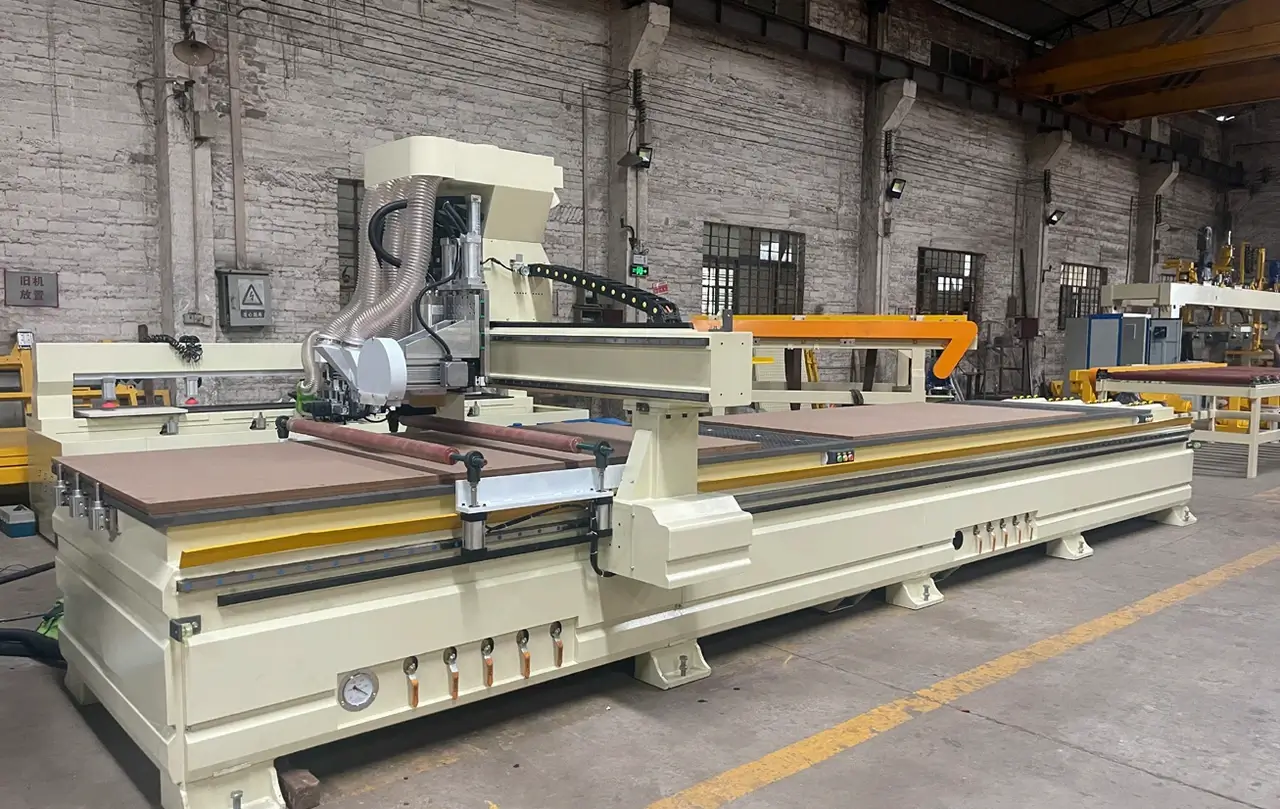
What should a finished-board cutting-machine demonstration prove?
A workshop demonstration can show a manufactured machine and some of its mechanical and electrical functions, but site acceptance must verify that the machine achieves the intended board product within the installed line. The correct trial uses relevant board dimensions and supports and clearly separates equipment operation from finished-sheet compliance. A statement that a cutter is accurate is incomplete without identifying what is being measured and which product condition is accepted.
Inspection must distinguish machine construction from board quality
The manufacturer should provide the machine drawing, included assemblies, operating method, relevant guarding and safety information, and the equipment-specific inspection plan. The current Zhonghong pages describe Board Cutting Machines for cured fiber-cement and calcium-silicate products but do not publish an across-the-range model number, blade specification, tolerance, working speed or maintenance interval. A buyer should request those for the quoted machine rather than borrow figures from an unrelated manufacturer.
If boards will be cut in a new market, the factory must also determine the appropriate finished-product requirements. Standards such as EN 12467 can apply to certain fiber-cement flat sheets, but machine ownership is not proof that the future product automatically satisfies a standard. The supplier may demonstrate a cutting function while the manufacturer of the finished board remains responsible for the appropriate product-testing plan.
Run the trial across a realistic product mix
A distributor that regularly orders several dimensions should include representative formats in acceptance, especially where a change in length or width also affects conveying and discharge. A factory with one launch product may sensibly prioritize that product first and record possible later variants separately. The objective is to test the machine against commercial requirements, not to build the broadest possible list of hypothetical dimensions.
For a wall-panel order that must fit within a defined assembly, inspecting only the longest dimension is inadequate. The buyer may also need to assess squareness, cut-edge condition and variation between boards, with the actual limits established in the finished-product specification. The factory should identify where samples are measured after the tool and how unacceptable pieces are routed away from accepted production. If the equipment will process mixed orders, a change from one approved format to another should be demonstrated; it can reveal incorrect guide positions or product settings before repeated commercial orders are released. These are specific acceptance decisions, not claims that a generic cutter automatically meets one universal tolerance.
One useful trial can follow a cured board from its receiving point, through alignment and cutting, to the next station. The test can then document the measured outcome and any issues with support or handling. The supplier should also describe what happens when the receiving or discharge side is unavailable. That operational response matters to a continuous finishing line and cannot be inferred from a successful cut on an isolated sample.
Safety and waste handling require a site-specific plan
Cutting mineral-based boards can generate dust or waste depending on the cutting method and material. The plant must evaluate appropriate control measures and operator protection for the actual equipment installed. Competitor machinery descriptions may explain general approaches, but they are not proof that a particular Zhonghong machine includes a given dust collector, extraction rating or waste-recovery system. The purchaser should make those items explicit in the order.
A retrofit may have existing extraction or material handling infrastructure, while a new workshop needs suitable services and access from the outset. The supplier should provide the relevant site interfaces and the scope of its installation assistance. An equipment price that excludes necessary extraction, guarding or downstream handling cannot be compared fairly with a quote that includes those functions.

A finished cutting station should be purchased for an actual order mix
Machine selection becomes clearer when the buyer can show the planned product, the incoming cured board, the finished dimensions and the next process. Zhonghong’s engineering services include equipment design, manufacturing, electrical automation, installation and commissioning; each project still needs a contract defining the scope supplied. A standalone cutter in an operating factory requires detailed retained-equipment interfaces, while a new plant has to coordinate cutting with curing, sanding and packing from the beginning.
Distributor orders reward flexible handling only when it is verified
A distributor may want to cut a smaller set of cured stock-board formats into several commercial products. In that case, repeatable dimensions and efficient product changes are more valuable than an abstract maximum cutting speed. The proposed equipment should handle the board sizes the business actually expects to sell. The buyer can ask for changeover demonstrations, but an automatic function should be considered verified only if it is included in the manufacturer’s actual specification and trial.
Storing many product dimensions in a controller does not guarantee the conveyor or discharge station can handle every one. A supplier should explain which changes require mechanical adjustment, which are part of the agreed control functions, and how operators verify that the correct board is being processed. These questions follow directly from a real distributor’s production requirements rather than from a generic list of machine features.
Existing lines need a fault diagnosis before machine replacement
A plant that regularly rejects boards for final length should record whether the deviation appears during cutting or earlier in the process. The sanding selection article addresses other finished-board requirements, while the equipment bottleneck guide examines delays between stations. Together with the equipment directory, they give buyers ways to frame the problem without assuming the final cutter is always the cause.
A suitable Board Cutting Machine order should state exactly what cured sheet it receives, which final dimensions it produces, and how product leaves the station in the required condition. That gives the machine supplier a testable job and gives the buyer an objective basis for deciding whether the equipment is worth installing.