


Fiber Cement Board Automatic Dosing System: Formula Accuracy Is Only the Beginning

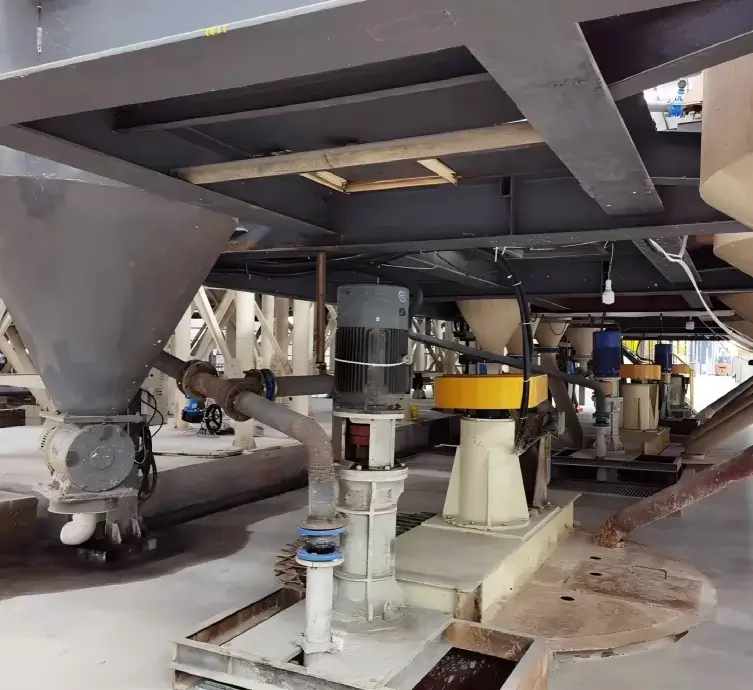
A Fiber Cement Board Automatic Dosing System helps a factory measure and combine raw materials according to a selected production formula, but accurate weighing is only one part of supplying suitable slurry to the forming machine. Buyers should first identify the materials the plant will receive, the recipe approved for its commercial board, the process condition required at the slurry outlet and how operators will recognize a deviation. Zhonghong lists an Automatic Dosing System for matching the required formula and slurry concentration, together with a Ball Mill, Slurry Storage Tank, Hatschek and Flow-on forming equipment, electrical cabinets and PLC-based line monitoring. Its raw-material preparation range defines these functions; a procurement discussion must still establish the material and instrumentation details of the actual dosing installation.
One prospective factory may purchase preprocessed mineral inputs from established suppliers, while another plans to grind locally sourced material before mixing. A third, already operating a board line, might have repeatable weighing records yet struggle with unstable sheet formation. These are different engineering problems. The equipment choice should be linked to what the dosing system actually controls and to the tests required at the forming stage, rather than to an unsupported claim that automation alone makes every slurry consistent.
Start the dosing discussion with an approved fiber-cement formula
A recipe is more than a list of ingredient names. The factory should understand which materials are metered, how they arrive at the dosing equipment and what preparation is required before mixing. Zhonghong describes its system as combining raw materials to achieve the formula and slurry concentration specified for production. That is a documented task, but no universal composition, measurement accuracy or throughput has been published for every Zhonghong project. The buyer must obtain values and acceptance conditions suitable for its actual materials.
Formula revision control matters when a board range changes
An investor launching one standard board should identify that product’s approved formulation and the person responsible for authorizing changes. A plant that later introduces another thickness or surface specification may need to evaluate whether its mixture also changes. The dosing system should support a clear process for selecting the intended recipe, but no specific software recipe-management feature should be assumed unless the supplier offers and demonstrates it.
For example, a factory may store two approved board products for different buyers. If an operator inadvertently produces material against the wrong formulation, the consequences may only become apparent at forming or after curing. A supplier should discuss which safeguards and records are within the quoted controller’s scope. An attractive interface cannot replace a procedure that identifies the product actually being made.
Measurement records cannot validate unsuitable raw materials
A weighing device may record the correct amount of an input whose composition or physical condition has changed. The procurement decision must therefore separate measurement accuracy from material suitability. Zhonghong describes raw-material testing and product development as engineering services. A buyer sourcing new feedstock should establish who samples it, how it will be evaluated and when the process team will approve it for dosing.
Suppose an investor changes a silica-bearing mineral supplier after an equipment order has been placed. Even when the same nominal mass is delivered to mixing, the process may require review because feed characteristics can differ. A dosing machine cannot make two dissimilar inputs behave identically. The engineering team should document what it knows and which assumptions still depend on trials instead of issuing an unverified finished-board guarantee.
Why the ball mill, dosing station and slurry tank are three separate investments
The site lists a Ball Mill for mineral grinding, an Automatic Dosing System for proportioning ingredients and a Slurry Storage Tank for holding prepared material. Their functions are related but not interchangeable. Grinding changes the preparation of some feedstocks; dosing controls quantities introduced to the process; slurry storage supports transfer between preparation and forming. A technically useful quotation should show the boundaries of these stages.
Grinding preparation affects what the dosing system receives
When a factory grinds material on site, the condition of the prepared mineral feed matters to its later mixing and forming behaviour. The Ball Mill offered by Zhonghong belongs to this preparation route. If the customer instead procures a suitable prepared input, the equipment configuration may be different. A manufacturer should explain the role of the mill in the selected project, rather than bundle one into every package without a raw-material basis.
Two suppliers may quote a dosing machine for a new plant while making different assumptions about upstream feed. One assumes a consistent prepared powder; the other includes additional mineral preparation. Their prices cannot be compared fairly until the material boundary is agreed. The purchaser should ask exactly what form of material enters the dosing system and which party guarantees that inlet condition for commissioning.
A slurry storage tank is a process connection, not a quality correction device
Zhonghong’s Slurry Storage Tank holds prepared slurry between stages, helping coordinate supply to forming. It cannot by itself correct an unsuitable mixture or an unapproved change in feed materials. The design should show the tank’s inlet and outlet responsibilities, the material condition expected at the former and how the plant responds if batching temporarily stops.
A factory may be tempted to purchase a larger storage tank when the former repeatedly waits for feed. That decision should follow operating evidence. The underlying problem may be inconsistent material preparation, inadequate coordination between batches and forming, or another issue. Increasing storage does not automatically resolve a badly defined recipe or a missing control signal. The buyer should trace actual material availability rather than assume a tank volume alone determines output.

Forming-machine behaviour is a practical test of dosing-system integration
Correctly measured ingredients must eventually be delivered in a condition that the chosen former can process. The company’s Hatschek Forming Machine uses a multi-cylinder layer-forming route, while the Flow-on Forming Machine distributes and dewaters slurry into a continuous sheet. Those different processes may call for different material and operating assessments. The equipment supplier should show how the dosing and slurry supply arrangement fits the proposed former rather than treating it as an isolated weighing station.
Hatschek layer formation creates visible questions about slurry condition
In a Hatschek process, slurry is presented to forming cylinders and layers are transferred into a green sheet. The physical behaviour of the suspension matters to deposition and dewatering. A dosing system that accurately measures raw materials contributes to process consistency, but it does not guarantee that layer formation will remain stable with any untested ingredient. A commissioning plan should therefore include representative slurry and a forming trial using the intended product.
An established factory experiencing uneven layers might begin by checking material changes, dosing records and the condition of prepared slurry before concluding that the former requires replacement. Those checks are different from simply asking whether the weighing mechanism runs. A supplier should help the operating team identify which variables its equipment records and which observations must come from process inspection.
Flow-on formation has its own feed and concentration concerns
Zhonghong describes Flow-on equipment through controlled slurry distribution, dewatering and thickness control. The dosing supplier should explain the feed delivered to that system and what happens when material supply is interrupted. A storage tank can be part of the route, while line controls may coordinate equipment availability. The exact process parameters and required slurry condition must be developed for the intended board.
A plant planning several sheet thicknesses should avoid assuming that recipe changeover and forming adjustment are the same action. If the process requires a different material condition, the supplier should identify that change and how it will be approved. If no formulation change is required, the manufacturer should not introduce unnecessary recipe complexity merely to advertise flexibility.
Thickness measurements are downstream evidence, not a direct dosing guarantee
Zhonghong lists a Thickness Measurement System for displaying board thickness during forming. That information may help operators notice a developing deviation, but it is not proof that the dosing equipment includes an automatic feedback loop. A buyer should specify what observations will be recorded and who will decide whether a variation belongs to feed preparation, layer formation, handling or another stage.
A factory trial can compare the intended recipe and observed board condition across a defined production run. The value is in being able to relate material preparation to a real product. Without an agreed process and measurement plan, collecting more data from separate machines may leave the operator with many numbers and no reliable way to investigate a defect.
What should a manufacturer prove before the dosing system is accepted?
A credible equipment supply begins with an actual scope: included feeders or metering devices, the materials each is intended to handle, relevant mechanical interfaces, the approved control functions and the tests available before and after installation. Zhonghong advertises equipment manufacturing, electrical engineering, automation and installation services, but a particular dosing-system package must state which of those are included. The company website does not publish a fixed accuracy rating, batch capacity or cycle time for every automatic dosing application.
Workshop tests should prove the supplied functions, not finished-board properties
Factory inspection can verify assembled equipment, selected movements and electrical functions in accordance with the order. If a dosing demonstration is arranged, the supplier should identify the material or test method used and what it establishes. A weighing or discharge test does not automatically certify the board ultimately produced from a cementitious mixture. Product acceptance depends on the full installed process and its approved raw materials.
For an export project, incoming raw-material storage and site utilities may be built by the owner, while machinery manufacturing and selected automation work come from the supplier. These boundaries should appear in the project documents. A dosing machine arriving intact cannot operate as intended if the adjacent process connections, electrical interfaces or approved recipe remain unspecified.
Plant handover should make a formulation change traceable
After commissioning, operators should understand which material belongs to each measured feed, how an approved formula is selected and what happens if the batching station cannot complete its intended operation. The supplier should provide the actual machine instructions and identify the control capabilities delivered. Its electrical cabinet and production monitoring options can be discussed as part of the scope, but unlisted reporting or remote-access features should not be assumed.
The plant planning article places preparation inside the overall production process, while the bottleneck guide addresses how feed interruptions affect usable output. The machinery directory provides the verified equipment families. A buyer should use these to ask about the precise integration required instead of requesting a generic promise of smart batching.

When does automatic dosing make more sense than replacing the former?
For an operating plant, a recurring formation problem should be diagnosed through the chain of events rather than blamed immediately on whichever machine is most visible. If the approved raw material varies, dosing may not be the only problem. If measurement is inconsistent, the formulation may be sound while the batching equipment needs attention. If the former receives acceptable slurry but wet-sheet formation still fails, another part of the line may be responsible.
A new factory has the opportunity to coordinate material preparation and forming from the beginning. It should specify the first commercial board, prepare a credible materials plan and test the dosing-to-forming route before assuming future product variants will work automatically. Zhonghong’s stated raw-material testing and engineering services are relevant to this work, but the contract should identify the tests and responsibilities that actually apply.
A suitable automatic dosing purchase gives the factory more than a record of numbers. It helps operators know which approved materials were introduced, how the resulting slurry was supplied to forming, and what evidence will reveal a deviation. When those questions have clear answers, the equipment can be evaluated against its true production role instead of a generic claim that accurate weighing guarantees board quality.