


Fiber Cement Board Autoclave: Match the Load and Board Chemistry Before Buying


A Fiber Cement Board Autoclave is an industrial steam-treatment system, but its usable contribution to a factory depends on the board being cured and the loads that can be prepared for it. For a plant owner, the first questions are the proposed fiber-cement or calcium-silicate product, the formulation and curing approach to be validated, the supporting pads or trolleys used to load boards, and how material will enter and leave the treatment area. Zhonghong offers an Autoclave Curing System for applicable board products, as well as a Board Stacker, Shuttle Car, Board Splitter, conveying machinery and electrical automation. Its documented equipment range provides a relevant starting point; an autoclave vessel dimension or another company’s curing recipe cannot substitute for a project-specific load and process study.
A new factory may have enough forming capacity to supply many boards but no realistic method for organizing curing loads. Another operator may already have an autoclave and want to increase accepted output by improving material handling instead of buying an additional vessel. Both require the same discipline: follow one target board from the stacker to the curing load, through treatment and onward to separation and finishing, with each equipment responsibility named.
What board is the autoclave actually expected to cure?
Some fiber-cement and calcium-silicate boards use hydrothermal treatment as part of developing their finished properties. Technical literature on Hatschek products explains that the chemical interaction of calcium and silica-containing ingredients under steam-treatment conditions contributes to the binder system in certain products. That process background establishes why formulation and treatment must be assessed together. It does not establish the curing temperature, pressure or time applicable to every Zhonghong customer, and it should never be presented as a universal recipe.
Material chemistry must be approved before curing performance is promised
Zhonghong’s manufacturing range includes a Ball Mill for mineral preparation, an Automatic Dosing System for measuring a production formula and slurry concentration, and Hatschek or Flow-on forming routes. These upstream functions influence the material entering later treatment. A supplier proposing an autoclave should therefore know which board formulation is intended and which tests will show that the process produces an acceptable finished sheet.
Suppose an investor plans to use locally available silica-bearing material. A curing condition reported by another factory may not be suitable for the intended product without trials using the actual feed. The manufacturer should distinguish confirmed equipment design from process assumptions still dependent on raw-material testing. A boiler or vessel cannot compensate for a formulation that has not been shown to produce the required board.
Board application determines the final acceptance discussion
An interior substrate and an externally exposed flat sheet may have different required product tests. A standard such as EN 12467 covers certain fiber-cement flat-sheet product requirements and testing methods, but the buyer must establish which product category and destination rules actually apply. Owning an autoclave is not proof that a board produced from any material will meet a specified category. This is a finished-product question that must remain separate from inspecting the pressure vessel and its installed equipment.
A credible factory trial records the formulation and process route used, the curing method applied and the results of agreed product measurements. If the company later introduces another board type, the process may require further validation. The investor should not make the procurement decision around a promise that one fixed treatment setting is suitable for an unlimited range of products.
A curing load starts as a material-handling problem
Boards reaching the treatment area must be organized in a form the proposed equipment can receive. Zhonghong’s Board Stacker prepares green material, a Shuttle Car transfers board or mould-plate trolleys between stations, and an Autoclave Curing System carries out the treatment itself. These are distinct machinery functions. The plant’s overall layout must show how a stack becomes a load, how the load moves safely, and what happens after it leaves the vessel.
Stack dimensions matter more than an isolated vessel headline
An autoclave’s nominal internal dimensions do not identify how many acceptable boards can be processed in an operating factory. The usable load also depends on the board format, support system and movement arrangement. A supplier should calculate the proposed process against an actual product rather than quote a theoretical volume without explaining what occupies it. The website does not publish one universal curing capacity or load geometry for every board project.
Imagine two factories buying similar vessels but making different board sizes. If one requires substantial support or a different load pattern, its useful output may not match the other’s. This is not evidence that either factory is inefficient: the product and handling design differ. The investment model needs to state those assumptions before management approves a plant-capacity figure.
Shuttle-car movement and vessel treatment should be timed separately
Zhonghong lists a Shuttle Car used to move board or mould-plate trolleys and a separate curing vessel. The shuttle performs a transfer function; it is not itself the steam-treatment operation. A capacity discussion should therefore consider when a complete load becomes available, when the receiving area is ready and how finished material is removed. Counting only the treatment period excludes the time and equipment required to prepare and recover loads.
A plant owner considering a new autoclave should examine whether existing transfer equipment can handle the planned load. An expansion may require additional trolleys or a revised layout, but the quantity and configuration cannot be inferred from a general catalog. The supplier should provide its own drawing, load-handling calculation and the interfaces that the site owner must prepare.
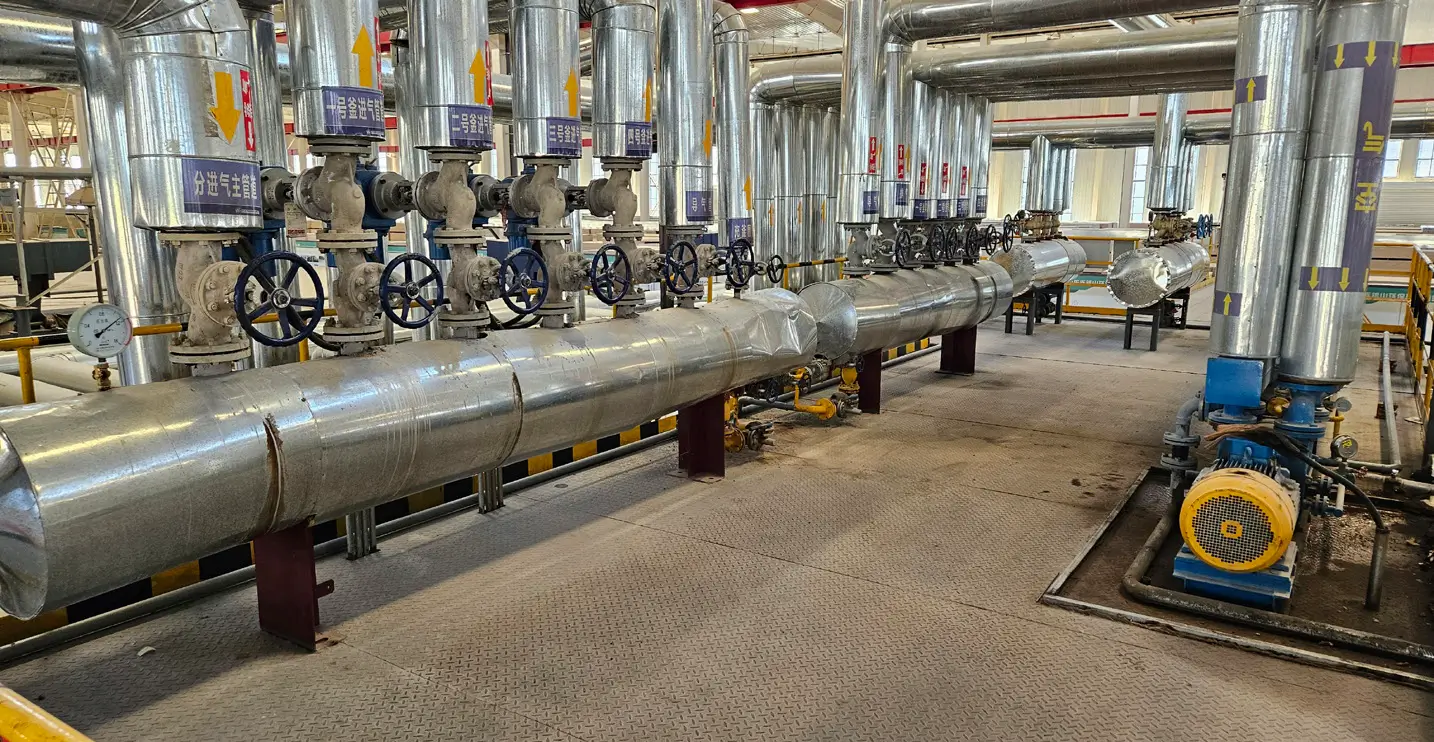
Why the slowest curing-area handoff can limit the entire plant
Forming often produces a moving wet sheet, while autoclave treatment takes place in prepared loads. This change in operating rhythm matters to usable output. If loads cannot be completed or removed when intended, upstream material may wait even if its machinery is operating correctly. An engineering model should follow the target board through the entire process rather than multiply a former’s nominal speed by scheduled operating hours.
Occupied discharge routes can delay the next curing load
Consider an operating plant where finished boards cannot be moved away from the unloading area because the next transfer system is occupied. The autoclave may be mechanically available while the factory cannot begin another load according to its intended sequence. Buying additional vessel capacity could leave the same downstream constraint in place. Recording the actual handoff is the first useful step in diagnosing that situation.
Zhonghong supplies Roller Conveyors and other handling machinery and offers a Board Splitter for separating cured boards from their supporting pads. A retrofit review should inspect where the boards and pads go after treatment. These are distinct material streams with different equipment roles, and the receiving layout must be able to handle the planned board mix.
The Board Splitter is a post-curing operation, not an autoclave feature
The catalog’s Board Splitter separates cured boards and curing pads and stacks sheets for later processing. This is not the same function as the mould-plate Stripping Machine used in another board-handling context. A supplier quotation should name the correct item and the material that it receives. Using the generic word “separator” can leave an owner purchasing equipment for the wrong stage.
A factory with increasing losses after curing should identify whether the problem begins during treatment, load movement, splitting or transfer to finishing. The production bottleneck discussion addresses how these constraints can migrate between stations. An autoclave purchase cannot be justified solely by a poor finished-board count without investigating where acceptable material is being lost.
Equipment safety and steam services cannot be inferred from marketing terms
An autoclave is pressure equipment that requires appropriate design, inspection, installation and operating procedures. The destination country’s requirements and the particulars of the vessel determine what documentation, approvals or inspection arrangements apply. Codes and standards from organizations such as ASME provide general frameworks for pressure-vessel engineering, but a reference to those standards does not prove that a specific Zhonghong vessel holds an unverified certificate. Buyers should request documentation belonging to the actual unit and installation.
Steam and utility responsibility must be written into the project boundary
A complete curing area may rely on suitable steam supply, piping, condensate management, controls and other site services. Whether those are included in a particular equipment contract must be confirmed with the manufacturer and the project engineer. The reviewed company pages describe engineering, manufacturing and installation services, but do not establish one fixed utility consumption or steam system that can be promised for every fiber-cement factory.
A new-plant investor should clarify who designs the equipment interfaces and who provides the site infrastructure before construction begins. A retrofit customer must also check compatibility with existing services and safety provisions. A vessel arriving on schedule cannot be commissioned responsibly if its required connections and the corresponding responsibilities remain unresolved.
Operators need actual pressure-equipment instructions, not a generic factory checklist
Safe use depends on the specific supplied vessel, its protective systems and the trained personnel responsible for it. The manufacturer should provide the necessary operating and maintenance documentation in accordance with the agreed requirements. A supplier comparison should ask how inspections, records and safe access are addressed, without inventing control thresholds or advising unqualified staff to adjust pressure or temperature settings.
For export orders, handling and installation instructions must correspond to the actual equipment shipped. Large fabricated structures, control cabinets and transfer parts can have different lifting and transport considerations. Zhonghong describes packaging and transportation as part of its project services, but the detailed packing list and pressure-equipment compliance evidence should come from the specific order.

How to compare curing proposals without accepting imaginary capacity figures
A good supplier comparison asks for documents and demonstrations that refer to the same target board. Some evidence concerns machinery construction and site readiness; other evidence concerns the product made using the approved process. Mixing those categories into one broad promise of “high capacity” makes bids difficult to assess. A useful comparison identifies the load arrangement, supporting equipment, product trial and final destination of cured boards.
| Question to resolve | Evidence expected from the project |
|---|---|
| Which board will be treated? | Approved product, materials assumptions and testing plan |
| What enters the curing vessel? | Actual support and load arrangement drawing |
| How are loads transferred? | Trolley movement, station interface and safe operating sequence |
| What leaves the vessel? | Unloading route, separation operation and board inspection point |
| What is contractually included? | Machine schedule, utility boundaries and commissioning responsibilities |
Machine inspection and finished-board trials are distinct milestones
Workshop verification may establish fabricated equipment identity, selected mechanical operation and documented inspections. Product acceptance can require the installed factory, actual raw materials, treatment validation and testing after curing. A buyer should explicitly assign responsibility for both. A mechanical inspection cannot certify that every future fiber-cement or calcium-silicate formulation will meet its sales requirements.
For plant-wide decisions, the full production-line planning article follows the board from its intended application through to final finishing. The company’s engineering overview describes the broader services that may be relevant to a turnkey or upgrade project. The equipment proposal should translate those services into testable responsibilities for the actual curing area.
Capacity should be based on an approved board and realistic transfers
For a new investment, develop one commercial product and a credible load schedule before proposing future volume. For an existing plant, record where boards actually wait and whether treatment, loading, unloading or finishing is the constraint. Neither decision should rely on an unrelated manufacturer’s vessel size or curing duration. If process trials are not yet complete, the supplier should mark those assumptions as provisional.
A suitable autoclave proposal is one in which the buyer can follow the intended board into a defined curing load, through an approved process and out to inspection. When the load, utilities, safety responsibilities and product tests are explicit, the owner can compare real industrial supply packages instead of purchasing a pressure vessel on the strength of an unsupported output claim.