


EPS Sandwich Panel Production Line Manufacturer: Test the Mould and Finished Wall Panel

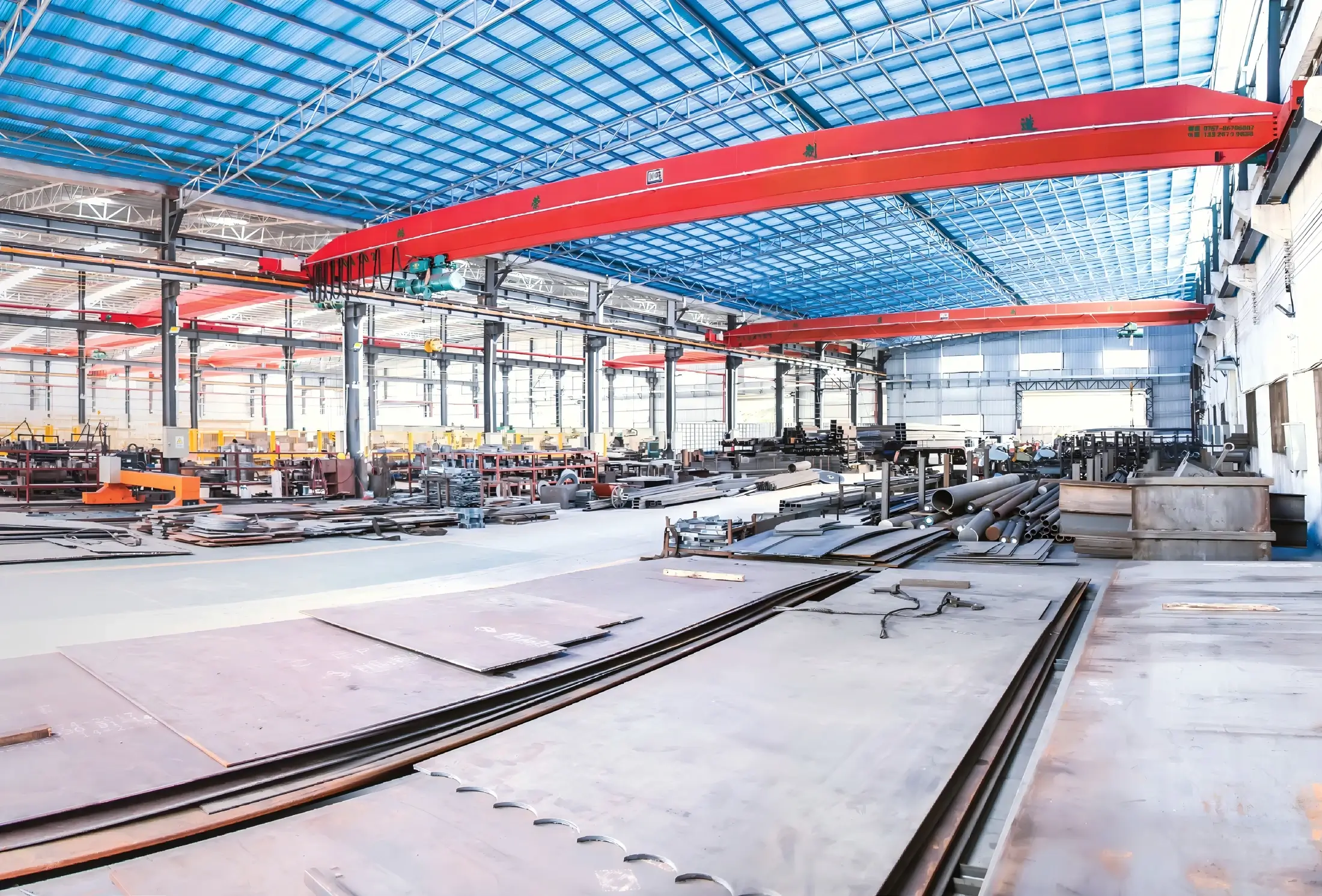
An industrial buyer selecting an EPS Sandwich Panel Production Line Manufacturer needs to see the proposed mould and a finished cement-EPS wall panel, not just a general machinery workshop. The critical question is whether the manufacturer can connect an approved face sheet and lightweight cementitious core with a repeatable filling, curing and demoulding sequence. For a factory selling prefabricated partition panels, poor mould geometry or face-to-core consistency can turn a mechanically successful installation into an unacceptable commercial product. Before comparing machine prices, define the intended panel thickness, lengths, facing material, edge joint and product testing. Zhonghong lists Cement EPS Sandwich Panel Production Lines among its solutions and documents process engineering, manufacturing, electrical automation and commissioning services. Its detailed equipment catalog includes machinery for fiber-cement and calcium-silicate boards, but the reviewed materials do not identify its own EPS particle pre-expander, core mixer or composite panel mould series. A serious supplier review must obtain those documents before making performance claims.
A distributor stocking lightweight partitions may need a tightly controlled set of edge joints so that later deliveries fit earlier orders. An engineering contractor ordering panels for one development may place greater emphasis on the approved sample, site installation details and the evidence behind performance declarations. They may purchase from the same factory, but a manufacturer should translate their distinct requirements into different acceptance conditions.
Ask the EPS sandwich panel manufacturer to identify the complete panel assembly
The phrase “EPS sandwich panel” can refer to distinct industrial products. Metal-faced insulated panels use a different manufacturing route from cement-based lightweight wall panels incorporating expanded polystyrene. Zhonghong’s stated solution is the latter: Cement EPS Sandwich Panel Production Lines. An offer should therefore describe a specific cementitious panel and its compatible facing, not a roll-forming machine for steel skins borrowed from an unrelated industry.
Facing sheets must be specified before mould tooling
Some cement-EPS wall panels are produced with fiber-cement or calcium-silicate sheet facings, while other industry examples use different skins. Zhonghong publishes board-production equipment including Hatschek and Flow-on forming machines, steam-curing machinery, Sanding Machines, Board Cutting Machines and Grinding & Chamfering Machines. That establishes relevant know-how in facing-board production and finishing, but not the exact faces, bonding arrangement or composite mould used in a Zhonghong EPS panel line.
A factory that purchases finished face sheets needs an incoming-material specification: dimensions, thickness, surface condition and the tolerances that the panel mould can accept. A factory producing its own facings has a separate production and quality responsibility upstream of panel assembly. The manufacturer should distinguish these options in the plant layout and pricing. Merely naming a calcium-silicate board in an equipment brochure does not settle the face-sheet quality that a new composite panel will need.
The panel joint is part of the tooling decision
Wall panels are purchased as construction products, not only as rectangular sheets. Depending on the chosen system, edge geometry may affect how adjoining panels fit and how installers handle connections. A buyer should provide the intended joint drawing and an acceptable trial sample before approving the mould. No tongue-and-groove dimension or proprietary edge-tooling model has been confirmed from the current Zhonghong product pages, and the factory should not promise one without engineering evidence.
What the EPS-core mixing station must prove to a buyer
General cement-EPS wall-panel production may use expanded polystyrene particles mixed into a cementitious matrix, with ingredients prepared and placed in a mould containing the intended facing material. Specialist line descriptions distinguish EPS bead preparation, mineral batching, mixing and casting. Those are useful process categories, but the supplier’s own proposed equipment and formulation remain to be verified. No competitor’s mixing time, bead density, motor power or output should be presented as Zhonghong technical data.
Expanded EPS and the cementitious matrix need compatible handling
The plant owner should clarify whether EPS particles arrive pre-expanded or whether a dedicated preparation section forms part of the order. This decision affects storage, transport and mixing equipment. Where particles are prepared on site, the supplier should identify the proposed expander and any conditioning arrangement, together with the material properties relevant to the intended core. The company website names the cement-EPS product family but does not yet publish those machine models.
For example, an investor buying locally available EPS material may need a different plant layout from one importing prepared beads. The supplier should ask which material is actually being purchased and how its quality will be controlled. The same applies to cement, fillers and other constituents: the formula must be developed for the approved product. An Automatic Dosing System in Zhonghong’s fiber-cement board catalog demonstrates an adjacent batching capability, but it is not evidence that the documented slurry recipe or mixer can be used unchanged for a lightweight EPS core.
A casting trial is more informative than a mixer-only test
A mixer may operate smoothly while the core material fails to fill the mould consistently or while the face sheets shift out of position. A meaningful supplier demonstration should therefore include the agreed material, the filling or casting arrangement and the panel that emerges after the selected setting and treatment. The buyer should record the material assumptions and acceptance observations, rather than accept an empty-mixer inspection as proof of composite-panel quality.
Imagine a mould intended for several face-sheet thicknesses. Changing the faces may change the volume and handling requirements of the core, even when the outside panel dimension is unchanged. The manufacturer should show how its proposed equipment accounts for such changes and which variants have actually been demonstrated. A generalized claim of automatic filling provides no substitute for a trial against the product the distributor or contractor expects to receive.

The composite mould is the manufacturing evidence most buyers are missing
Other manufacturers of cement-EPS panels describe mould cars, face-sheet positioning, core filling, curing and stripping. These process examples help define what an offer should disclose, but their own carriage dimensions, machine counts and output figures cannot be attributed to Zhonghong. A buyer should ask specifically for the proposed mould assembly, its panel support and the route that takes it through filling and release.
Identify every cavity, spacer and face support in the offered mould
A mould drawing should demonstrate how the intended faces are located, how the core occupies the agreed space and how the product’s external edges are formed. Where multiple panels are cast in one arrangement, the spacing and alignment should be clear enough for inspection. The project need not publish proprietary drawings online, but the buyer evaluating an order should have enough detail to confirm what will be built.
A supplier may claim that changing side components allows production of several panel thicknesses. That is plausible for some industry mould systems, but it must be demonstrated for the configuration being offered. What components are changed? Does the face position remain accurate? What trial verifies the new product geometry? These are product-specific questions rather than demands for a generic equipment checklist.
Demoulding must be safe for the core and both faces
A composite wall panel can be damaged when removed from its mould even if the mixture was correctly prepared. The supplier should explain the proposed release sequence, how the formed unit is supported and what happens if the panel adheres or moves incorrectly. Zhonghong’s listed Stripping Machine separates flat fiber-cement boards from mould plates using suction lifting and servo-controlled motion; that product is not automatically a composite EPS mould stripper. An actual EPS-specific machine drawing is needed.
Review the manufacturer’s workshop and control-system evidence separately
Zhonghong’s supplied company materials describe a machinery manufacturing workshop, engineering staff, electrical design and automation integration. Those are concrete areas for supplier due diligence, but the buyer should connect them to the exact composite-panel machines being offered. A workshop inspection can evaluate fabricated components and selected machine functions; the final wall-panel trial still depends on actual ingredients, faces, mould operation and curing.
Drawings and machine identity are more useful than a generic factory tour
A manufacturing inspection should identify which casting station, mould components or handling assemblies belong to the order, and which checks are available before shipment. If part of the package is still awaiting engineering design or is supplied by another manufacturer, the buyer should know that. A company may possess genuine fabrication facilities without every process machine shown in a general supplier catalog being its own standard product.
PLC control should handle the batch, mould and release sequence
Zhonghong lists Intelligent Line Control Systems and Electrical Control Cabinets for its documented board production range. For a cement-EPS panel line, the buyer should ask the manufacturer to describe how its proposed system will coordinate batching, filling readiness, mould movement and demoulding. These are proposed functional requirements, not evidence that an EPS-specific program is already included in the publicly displayed fiber-cement cabinet.
Suppose core material is mixed and ready while the intended mould is occupied. Operators should know what their process permits, how the interruption is displayed and what conditions must be met before the next batch begins. The control narrative should describe real equipment events. An attractive screen layout without defined machine signals cannot establish that the line will operate as intended.

Make the acceptance sample the centre of the EPS supplier contract
For a cement-EPS sandwich wall panel, mechanical assembly of a line is not the end of acceptance. The actual panel must meet the product description the buyer intends to sell. It may need dimensional checks, face alignment inspection and tests related to the intended building application. Requirements concerning fire, acoustic performance, moisture resistance or structural use depend on the destination market and the approved product design. The machinery supplier must not treat the EPS ingredient itself as proof of a particular rating.
Board-face consistency matters before the panel is assembled
If the customer intends to use calcium-silicate or fiber-cement facings, the factory should agree what is accepted from its face-board supplier. Zhonghong’s board machinery range includes sanding, cutting and edge-processing equipment that is relevant to making or finishing certain face sheets, but the suitability of any one machine for the proposed EPS panel production flow must be evaluated separately. A face sheet that fits one mould may not automatically suit a revised panel thickness or joint design.
Separate factory equipment testing from product performance testing
Workshop checks can establish machinery identity, operation and electrical functions. Product testing may require a completed panel made from the customer’s approved materials and process. A plant can pass its initial installation checks while the panel still needs changes to formulation, mould operation or curing. The contract should say what constitutes equipment acceptance and what evidence is required for the finished product.
Compare two manufacturers by the evidence they can actually deliver
Two proposals with similar headline prices may cover very different things. One could include EPS bead preparation, a core mixer, mould circulation, commissioning and operator training; another might only include moulds and a filling station. This is an industry comparison of possible scopes, not a description of a verified Zhonghong package. Each supplier should be asked to mark included equipment and define the responsibilities that remain with the owner.
An existing facing-board factory has a different expansion route
An owner already producing fiber-cement or calcium-silicate sheets may have some relevant manufacturing resources. However, adding a cement-EPS core and moulding section still requires a new process concept and testing of the assembled product. The cement-EPS production route article distinguishes these processes and highlights the missing verified EPS-specific equipment data. The company’s project engineering services offer a basis for discussing which elements of an expansion could be integrated.
The buyer should ask whether a proposal uses purchased face sheets, the current factory’s own boards or an additional facing-board line, and how each option changes equipment scope. That is a more useful purchasing discussion than assuming one generic EPS panel factory design suits every site and product.
Approve the mould and panel before accepting an annual capacity promise
The buyer should not approve a claimed output based only on the number of mould carriages or a competitor’s production figures. The actual panel dimensions, mould availability, curing and demoulding sequence, handling losses and inspection method are relevant to how a factory will perform. Request a capacity basis drawn from the offered equipment and an acceptance test using the intended panel. Where details remain unverified, leave them as outstanding technical decisions in the supplier comparison.
For a genuine manufacturing assessment, the strongest evidence is an identifiable machine package and a repeatable cement-EPS wall panel that matches the buyer’s product specification. Zhonghong’s confirmed machining, board-production and engineering services provide useful starting points, but the dedicated EPS mixing, mould and release equipment still needs its own verified drawings and demonstration. A responsible purchase proceeds when those items are clear—not when an unrelated panel technology is presented as equivalent.