


Building Materials Machinery Manufacturer: Why Product Routes Must Be Evaluated Separately

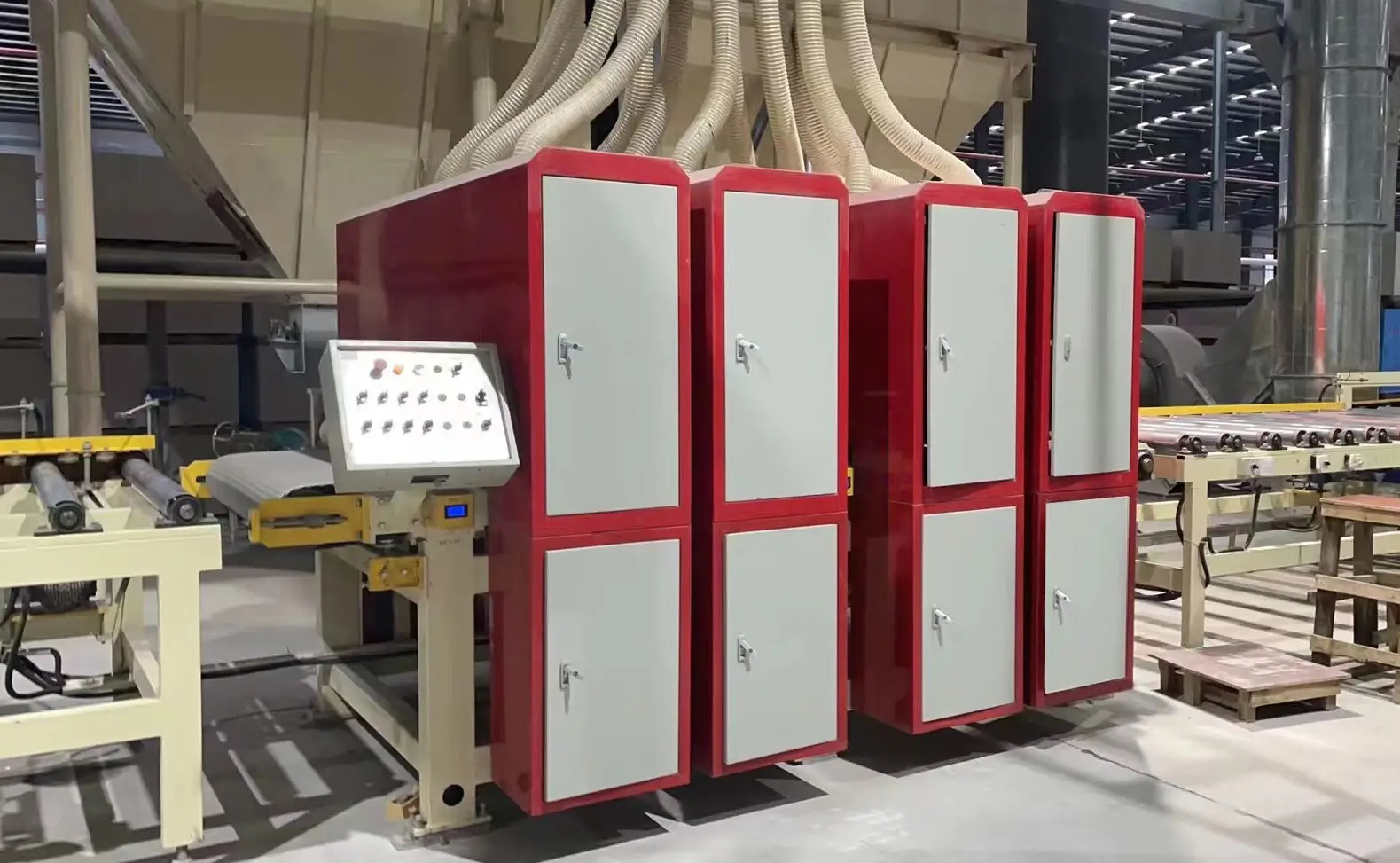
A developer looking for a building materials machinery manufacturer should first name the building product the proposed factory will sell. A fiber-cement board line, an autoclaved aerated concrete (AAC) block plant and a cement-EPS sandwich panel project may all involve mineral materials and industrial handling, but they are not the same manufacturing process. Comparing them as interchangeable “construction material machines” can produce misleading equipment quotes. Zhonghong presents fiber-cement and calcium-silicate board equipment, AAC block and panel production-line solutions, cement-EPS sandwich panel lines and automation or EPC services. Its detailed equipment catalog identifies ball milling, automatic dosing, slurry storage, forming, pressing, autoclave curing, cutting, sanding and conveying equipment for board manufacture. Buyers should use that information to identify verified capabilities and request project-specific evidence for any additional product family.
Consider a contractor investing in lightweight wall materials and another business replacing machinery in an existing fiber-cement factory. The first may still need to choose between selling blocks, composite panels or flat boards. The second already has a product and cares about the dimensions, process controls and downstream machines it must retain. A good manufacturer evaluation starts by recognizing that the customers are not asking the same engineering question.
Separate the building-material product before choosing machinery
Factory requirements begin with a sellable product, not a photograph of industrial equipment. A board is typically described by intended application, thickness, size, finish and required performance testing. A block is a different unit with its own production and handling route. A sandwich panel’s structure also matters to equipment selection. Zhonghong’s website identifies these categories as business areas, but a general product-family title is not evidence of one standard capacity, verified model number or a guaranteed outcome for every formulation.
Fiber-cement and calcium-silicate boards have defined forming and finishing stages
The detailed part of Zhonghong’s catalog concerns fiber-cement and calcium-silicate board equipment. Raw materials may be prepared using its Ball Mill, metered using an Automatic Dosing System and held as slurry in a storage tank. A Hatschek Forming Machine builds a wet sheet through a multi-cylinder route; a Flow-on Forming Machine uses controlled distribution and dewatering. The choice between them must reflect the intended board and feed material, not a generic recommendation that one method is always faster or better.
Green sheets may pass through the offered Waterjet Cutting System, Board Stacker, Hydraulic Press or Stripping Machine as required by the selected route. Steam-curing equipment, a Board Splitter, sanding machinery and cured-board cutting can then be part of the downstream factory. The precise combination is a customer-specific engineering issue. A manufacturer who can discuss how one board travels through those stations has more relevant information than a seller repeating that a line is “fully automatic.”
An AAC block or panel project is not a Hatschek-board retrofit
Autoclaved aerated concrete is made through a different manufacturing sequence. The European Autoclaved Aerated Concrete Association describes the use of mineral binders, silica materials, water and an aerating agent, followed by a rising mass, pre-curing, cutting and autoclave treatment. AAC blocks and reinforced AAC panels also have different product and reinforcement requirements. This is industry process context, not a verified specification of Zhonghong’s own AAC machinery.
Zhonghong lists AAC Block & Panel Production Lines on its homepage. The currently reviewed equipment catalog, however, is more detailed for fiber-cement and calcium-silicate board machinery than for an AAC-specific line. A buyer considering an AAC plant should therefore request separate AAC equipment drawings, a process description, the target block or panel range, the proposed reinforcement route if relevant and a project-specific capacity basis. Do not assume the published Hatschek former or green-board waterjet is an AAC cake cutter merely because both factories eventually make construction products.
A cement-EPS sandwich panel needs its own product definition
The website also lists Cement EPS Sandwich Panel Lines among its solutions. This establishes a business area but does not, by itself, establish a standard panel architecture, EPS material grade, curing process or promised performance. In the broader industry, cement-EPS sandwich wall panels can involve a lightweight cementitious core incorporating expanded polystyrene with suitable facing materials, but actual product structures vary. A buyer should ask which panel structure Zhonghong can propose for the intended application and which equipment and testing documents support it.
One investor may seek non-load-bearing partition elements, while another may be interested in a different wall assembly. Those requests should not be answered by the same machine quotation without discussing intended performance, panel dimensions and any relevant regulations. The company must confirm the product before specifying the line. Without a verified EPS machine series or detailed parameter sheet on the present website, no credible article should invent one.
Which factory functions can be discussed across product lines?
Some engineering disciplines are relevant to more than one type of factory even when their process machines are different. Raw-material storage, electrical supply, safe equipment access and the movement of materials from one station to another all need planning. That does not mean the same feed system, forming machine or curing arrangement is technically suitable for every product. The correct comparison distinguishes shared engineering questions from product-specific process choices.
Mineral preparation has to match the subsequent formation process
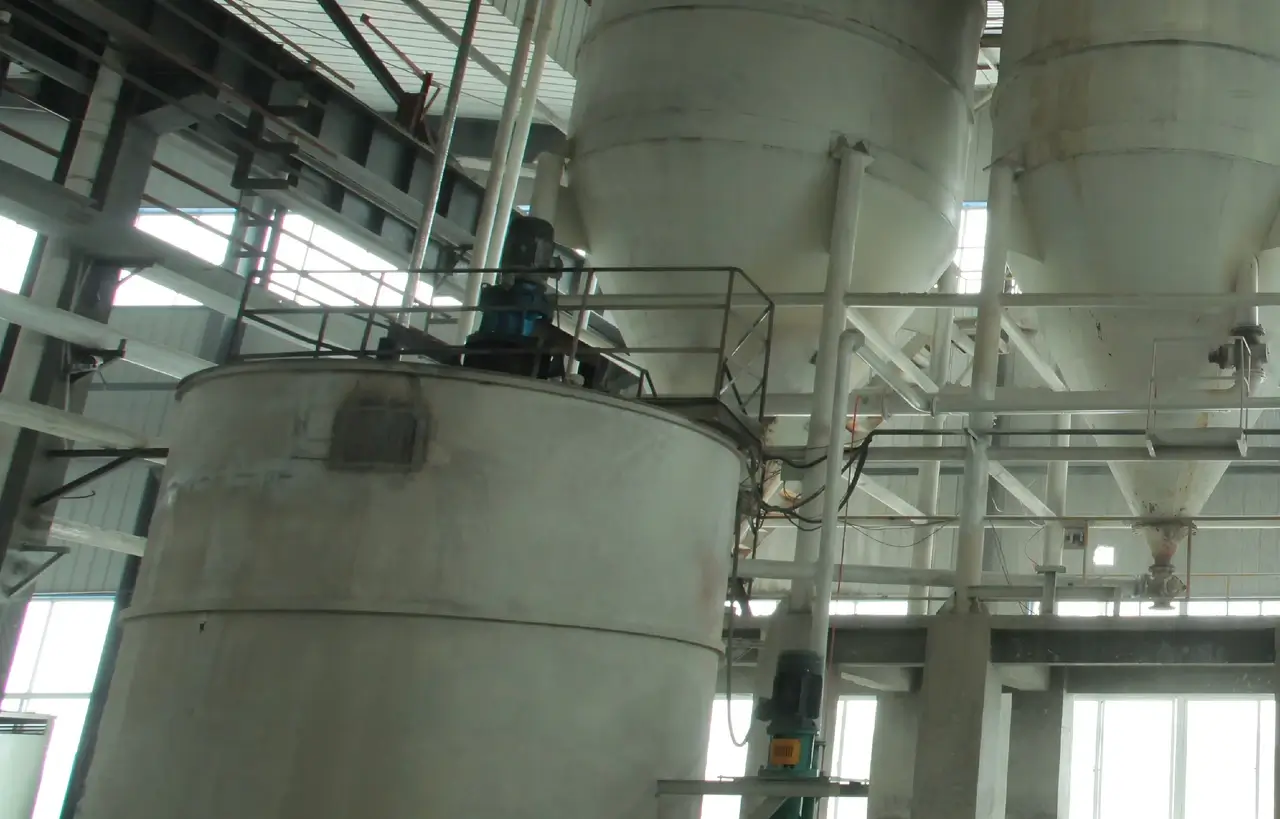
Zhonghong’s documented Ball Mill is used for mineral preparation in its fiber-cement and calcium-silicate board equipment range. Its Automatic Dosing System meters materials against a production formula and slurry concentration. Those machines illustrate the separate tasks of material conditioning and batching. In an AAC project, the industry’s production sequence can also include mineral grinding and controlled mixing, but a buyer must not treat the site photograph of a board-line ball mill as proof of a specified AAC plant package.
For a new project using local mineral feed, the manufacturer should define what material testing is necessary before the equipment configuration can be finalized. Another buyer who purchases prepared inputs may need a different receiving and dosing arrangement. The correct plant drawing starts with the raw-material data actually available, then traces each preparation stage to the next machine. A machine-only quote that ignores this can be inaccurate even when every item is genuinely offered by the manufacturer.
Steam curing must not be reduced to one universal autoclave capacity
The site lists an Autoclave Curing System for steam treatment of fiber-cement and calcium-silicate boards. AAC production in general also uses autoclave curing, as industry sources explain, but the loads, supporting arrangements and product conditions are specific to the chosen process. It would be misleading to copy the capacity or treatment recipe of one product line into another merely because an autoclave appears in both. A supplier’s engineering team must calculate the load and process basis for the particular factory.
A plant owner should ask which machines prepare the load, move it into the curing area, receive it afterward and return any supports or trolleys. Zhonghong’s listed Shuttle Car and Board Splitter illustrate transfer and separation functions within the reviewed board-machine range, but their suitability for a different product cannot be assumed. The operational sequence, rather than the label on a drawing, determines whether the arrangement is appropriate.
What an experienced machinery manufacturer should demonstrate
A buyer should distinguish an engineering company that can manufacture and integrate machinery from a dealer offering only a list of equipment. Zhonghong describes a combination of process engineering, machine manufacturing, electrical and automation services, installation and production support. Its company overview is relevant to supplier evaluation, but broad capability statements do not replace evidence for a particular order. The useful questions relate to drawings, the manufacturing stages actually observed, and what happens when new equipment reaches the customer’s site.
Workshop capability should be tied to an identifiable machine
Photographs of manufacturing facilities can show fabrication and machinery in progress. They cannot establish the identity, completed inspection status or contractual performance of an unquoted model. A purchaser should request the actual equipment schedule, approved drawings, proposed manufacturing checkpoints and an explanation of which functions can be tested before shipment. That request is reasonable whether the order contains a single roller conveyor or several coordinated production stations.
Control cabinets are useful only when their station signals are defined
Zhonghong offers Electrical Control Cabinets and an Intelligent Line Control System that uses PLC-based coordination and production monitoring. These are genuine categories on its equipment page. A buyer should ask which stations are covered, what information operators will see and how a pause or equipment fault affects neighbouring machines. The product description does not establish every possible remote-monitoring, analytics or automatic correction function; those features need explicit confirmation.
Different buyers need different evidence from the same supplier
A company building its first factory needs a coordinated concept from product to installed plant. A factory upgrading one machine needs compatibility, reliable delivery and a defined installation window. An international distributor considering several machinery types may need evidence that the product categories are genuinely supported rather than being unrelated listings. These buyers should receive different technical responses even if they contact the same manufacturer.
New factory owners should compare complete process routes
A new fiber-cement board plant requires the owner and supplier to define the preparation route, forming technology, green-board handling, curing, finishing and operator acceptance. A mixed-material investment may also need a market decision: flat sheets, AAC blocks or composite panels are not identical outputs. Zhonghong’s complete line overview and its individual equipment descriptions provide a way to begin evaluating the board-line scope. For AAC or EPS projects, the buyer should request equivalent product-specific evidence before accepting a plant-wide price.
The owner must also know what lies outside machinery supply. Foundations, building utilities, raw-material testing, site permits, installation supervision and operator training should be allocated in a responsibility schedule. Company experience can support the process, but a contract must state who performs each task. A quotation that omits these boundaries may appear less expensive while leaving material work for the customer.
Existing factories should describe the machines that will remain
For a retrofit, the buyer can usually describe current operating problems more precisely than a greenfield investor. Perhaps a finished-board cutter is no longer suitable for its product range, a conveyor transfer causes breakage or an old electrical cabinet cannot coordinate new equipment. The site lists Board Cutting Machines, Roller Conveyors and Electrical Control Cabinets as separate families, so the manufacturer can discuss a defined machine task rather than a complete factory by default.
Yet even a standalone machine needs the surrounding context. The retained machine’s transfer height, feed condition, electrical signals and available installation access can determine the design. A replacement machine may pass factory inspection and still require modification if those interfaces were not supplied. A reliable quotation names the drawings and site information needed before final manufacture.

Compare manufacturer offers by verifiable project deliverables
Price differences can reflect very different scopes. One supplier may quote a formed-board production section; another may include curing, finishing and service work. When comparing them, list the board product, the included equipment, engineering interfaces, installation responsibilities and the acceptance tests each quotation will support. A broad claim about superior technology has little purchasing value unless it connects to the buyer’s operating requirement.
Each product family needs its own trial and acceptance basis
For fiber-cement exterior flat sheets, ASTM C1186 is an example of a product specification whose scope and requirements should be reviewed for the intended market. AAC blocks or reinforced panels belong to different product and manufacturing discussions, and a cement-EPS panel may involve another set of requirements. A factory acceptance plan should never assume one finished-product standard governs all three materials. The owner’s product engineers must identify suitable tests and the responsibility for performing them.
Mechanical inspections in the supplier’s workshop and commissioning after installation are also different evidence. A machine may pass a motor or transfer function check before shipment while finished-product trials require actual raw materials and downstream equipment. The agreement should describe both stages and the records to be provided. The equipment acceptance article examines this distinction for the board-machine range in more depth.
A manufacturer comparison ends with a usable scope, not a slogan
For every proposed line, request a description of the finished product, a process route, an equipment schedule, installation interfaces and a clear statement of what remains unconfirmed. For machinery upgrades, focus on the receiving and discharge conditions of the machine being replaced. For AAC or EPS concepts mentioned in a broad portfolio, request separate data before treating them as engineered configurations. This approach gives the buyer something measurable rather than a general promise that one company supplies every kind of building material machinery.
Zhonghong’s published product and engineering descriptions support discussions about board preparation, forming, curing, finishing and automation. A buyer should use those documented starting points, then demand evidence suited to the actual building product and project. The right manufacturer is the one whose proposed process can be checked against what the customer’s factory is supposed to make.