


Fiber Cement Board Production Line Upgrade: Diagnose First, Replace Second

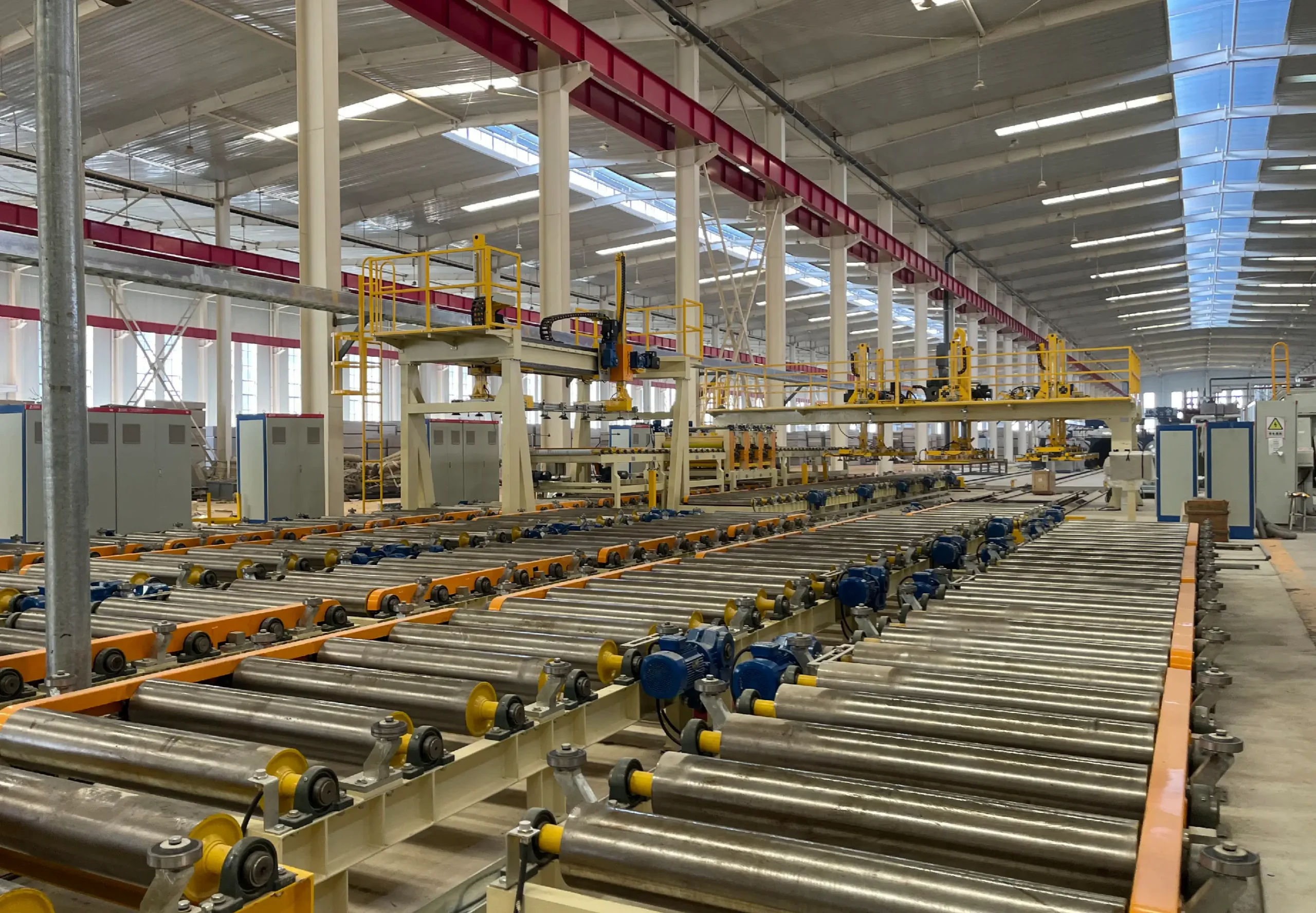
A Fiber Cement Board Production Line Upgrade should begin with a measured limitation in an operating factory, not with the assumption that newer equipment will automatically increase saleable output. A plant may have a stable Hatschek former but lose green sheets during stacking, experience a curing-load bottleneck, or reject boards at the finishing stage. Each problem calls for a different investigation and may justify a different machinery package. Zhonghong supplies equipment for raw-material preparation, Hatschek and Flow-on formation, waterjet cutting, servo stacking, pressing, autoclave curing, board separation, sanding, cutting and PLC automation. Its equipment range and engineering services provide relevant options, but a retrofit should be built around the old plant’s actual product, retained machines, site constraints and planned production shutdown.
Consider a factory that forms enough green board for its current orders but frequently loses material between cutting and stacking. Installing a larger forming unit could leave the same problem in place. Another factory might be planning a higher-quality architectural board that its existing finishing equipment cannot deliver consistently. It may need a focused sanding and edge-processing project rather than a new wet end. Both are legitimate production-line upgrades; neither can be priced intelligently without establishing the problem to solve.
Start by locating the first measurable production constraint
Operations staff often describe a line as “slow” even when the cause is concentrated at one station or transfer. A useful upgrade study follows the intended board from prepared material through forming, handling, curing and final inspection. Record where material waits, where defects begin and which machine is unable to receive the next board. This is more actionable than comparing a current line’s theoretical capacity with a sales brochure’s headline output.
Do not blame the forming machine for every rejected board
Zhonghong’s Hatschek Forming Machine uses a multi-cylinder process to accumulate wet layers; its Flow-on Forming Machine distributes and dewaters slurry into a continuous sheet. Both require suitable prepared feed. When a plant experiences unstable forming, the investigation should also consider the Ball Mill, Automatic Dosing System, Slurry Storage Tank and process conditions rather than assume that replacing the former will fix an unverified material problem.
An operator may observe a thickness change only after switching raw-material sources. Before approving a new machine, the factory should document the material difference and the condition at the forming section. Another plant could have stable wet-sheet formation but a control problem that interrupts board release. Those scenarios have different solutions. The supplier should use real site and product evidence to distinguish process, control and mechanical causes.
Green-board transfer can limit output before curing begins
The Waterjet Cutting System sizes green sheets, while a servo-controlled Board Stacker positions material for the next operation. If the stacker cannot accept another board, the forming and cutting sequence may have to pause. A replacement stacker or a better-controlled material handoff can be relevant where the loss occurs at this interface. A new former may not help until the transfer limitation is resolved.
For a factory adding another board length, the upgrade study should examine whether the original cutting and stacking arrangement can support that material. A programmed dimension change does not guarantee that the green board will be handled properly. The engineering team should observe a representative trial and identify the equipment that actually needs modification.
When curing and finishing are the true bottlenecks
After green-board handling, some product routes include pressing, mould-plate separation and autoclave treatment. Finished boards may then be split from curing pads, sanded, edge-treated and cut to final dimensions. These stages work with different material conditions and operating rhythms. A factory that concentrates only on the forming machine can overlook the limiting capacity of an autoclave loading route or a post-curing finishing operation.
Autoclave load movement can be a more useful investment than another vessel
Zhonghong offers an Autoclave Curing System for applicable board processes, a Shuttle Car to move trolleys and a Board Splitter for separating cured sheets from supporting pads. A plant considering an additional autoclave should first review its loading schedule, trolley route, curing process and discharge capacity. If loads cannot be prepared or removed at the required pace, the existing vessel may be waiting for handling rather than limiting treatment capacity.
Imagine an operator who sees the autoclave idle between treatment cycles because the next load is not ready. New capacity may be available through better coordination or handling, depending on the real system. An equipment supplier should not present an assumed curing recipe or universal output number without actual board and load data. A useful retrofit proposal names the movement that will change and how it will be tested with the customer’s product.
A new board surface may justify sanding and chamfering before more forming equipment
Zhonghong’s Sanding Machine addresses cured-board surface and thickness requirements, its Grinding & Chamfering Machine prepares edges, and its Board Cutting Machine establishes final dimensions. A factory moving from a plain backing sheet into visible architectural panels may find that finishing capability constrains what it can sell. Adding a larger former would not create the accepted surface or edge profile by itself.
The buyer should establish the launch product’s final specification and inspect boards as they move through finishing. If sanding results are inconsistent because the incoming boards are already defective, the team should investigate earlier processes. If the substrate is satisfactory but the finishing machine cannot perform the required operation, a targeted investment may be justified. An honest proposal distinguishes those causes rather than bundling every available finishing machine into a supposed universal upgrade.

Retained equipment defines the engineering scope of a brownfield project
An operating factory already has foundations, utilities, controls and handling machinery that may be expensive to replace unnecessarily. A good upgrade design identifies what will remain and how new equipment will connect to it. Zhonghong provides process and equipment engineering, electrical automation, manufacturing, installation and production support as services, but each quotation should define which site survey, interface work and commissioning duties are included.
Machine elevations and transfer geometry are not optional details
A new Board Stacker can be mechanically sound yet unable to receive green sheets from an older cutter at its existing discharge level. A new Board Cutting Machine can meet workshop tests while failing to align with a retained conveyor. Before fabrication, the supplier should receive dimensions, product conditions and available access for the stations surrounding the intended replacement.
A buyer should not assume that one standard equipment arrangement can be dropped into every factory without modification. Site drawings, even if imperfect, need to be checked and updated where necessary. A small amount of early engineering can prevent the owner from paying for an installation that requires unplanned frames, controls or civil changes after equipment arrives.
Electrical changes must preserve necessary plant behaviour
Zhonghong lists Electrical Control Cabinets and an Intelligent Line Control System with PLC coordination and production monitoring. In a retrofit, a controls upgrade may be worthwhile if stations cannot exchange reliable readiness signals or operators cannot diagnose production interruptions. The supplier should identify the retained hardware, new signals and required tests. The presence of a modern HMI does not establish that every safety or automatic adjustment function is included.
Consider a machine that has been replaced while its neighbours still use older controls. The new station may require an agreed ready/complete handshake to prevent boards entering an occupied transfer. Who modifies the old controller? Who supplies field wiring? Who performs the integrated test? These decisions should be assigned contractually before shutdown, not negotiated during the first failed trial run.
Phase the upgrade around the factory’s production obligations
Shutting down an operating line has a commercial effect that a new factory does not face. A sensible plan distinguishes work that can be completed before a shutdown from work that requires the machines to be unavailable. The supplier may be able to fabricate and inspect equipment while the owner prepares foundations or services, but the sequence depends on the actual installation and safe working conditions.
Choose the first upgrade phase from evidence, not from the largest equipment price
A plant may have several improvement ideas: new controls, a faster stacker, an additional finishing station and revised curing transport. These should be evaluated against the same product and accepted output rather than approved simultaneously without a diagnostic basis. If a bottleneck moves after one change, the next investment can be reassessed using updated operating observations. This prevents the owner from spending on a machine whose intended benefit disappears because another station remains constrained.
For a manufacturer facing recurring losses at final cutting, a post-curing equipment trial may be a better first phase than a new autoclave. For a plant whose board surfaces are accepted but curing loads wait on trolley movement, the investment question lies elsewhere. No universal percentage improvement can be claimed for a Zhonghong upgrade without site data and a verified scope.
Prepare installation and restart criteria before the shutdown begins
A replacement machine should arrive with drawings, identified assemblies and the information needed for lifting, utilities and control integration. The existing plant should know which equipment must be isolated and how staff will verify that the new interface is safe to use. Suppliers can provide installation and training services, but these obligations and the conditions for restart need to be agreed for the project.
Testing should separate mechanical installation from operation with actual boards. A machine may move correctly before production resumes, but the owner still needs to observe representative material passing through retained and new equipment together. The contract should identify which parties support these trials and which problems trigger additional engineering review.

- Record where acceptable boards are lost or where waiting first occurs.
- Identify the retained machines and the new station’s real inlet and outlet.
- Complete workshop checks before using the limited production shutdown.
- Test the installed change using the commercial board and its receiving equipment.
Prove that the upgrade changed the intended result
A useful acceptance test compares the old problem with the new operating condition. For a stacking upgrade, it can follow a green board from cutting into a completed load. For finishing, it can inspect the accepted surface and edge on the intended product. For curing transport, it can demonstrate the actual load movement and receiving conditions. A broad claim that the factory is now “more automated” is insufficient if the original production constraint remains.
Measure product quality and station availability separately
Line availability and finished-board acceptance are related but different. A new conveyor may reduce interruptions while the formulation still needs adjustment; an improved sanding machine may deliver the required surface without changing upstream throughput. The owner should define both types of evidence before the upgrade is installed so that project success is not judged by an arbitrary number announced after commissioning.
The equipment bottleneck guide explains how constraints appear across a plant, while the individual equipment guide focuses on replacement station interfaces. Together with Zhonghong’s actual product catalogue, they give the owner a better basis for targeting an investment than a generic claim about upgrading all machinery at once.
A successful retrofit leaves the operating team with current records
After installation, staff should have the relevant equipment drawings, control and operating information, maintenance responsibilities and an explanation of which old components remain. This helps the next engineer understand how the upgraded line is configured, especially if a later project adds a board thickness or changes a process stage. No universal warranty, spare stock or performance improvement should be invented from the company profile; the actual terms belong in the order.
A worthwhile upgrade improves the operation that prompted the investment and preserves the plant’s ability to make its approved board. If the proposal can show where output was previously lost, which station changes and how the new route will be tested, the buyer has a concrete reason to proceed. If those questions remain unanswered, ordering another machine may only move the same problem farther along the line.