


Fiber Cement Board Stripping Machine Supplier: Who Supplies Both Material Routes?

When two quotations describe the same Fiber Cement Board Stripping Machine Supplier requirement, they can still cover different equipment. One may include a suction-lifting unit only; another may price the board discharge, mould-plate return, controls integration and installation services. For a factory replacing its demoulding station, this difference matters more than a generic promise of automation. The buyer should begin with the board and supporting plate: their dimensions, condition on arrival, the intended separation action, and where each component must go afterward. Zhonghong documents a Stripping Machine using coordinated suction lifting and servo-controlled travel, alongside a Board Stacker, Hydraulic Press, Roller Conveyor and Intelligent Line Control System. Its equipment range establishes the related machine functions; a supply agreement must determine which are actually being purchased.
Consider a plant that retains its existing mould plates and hydraulic press but replaces the older stripper. The machine supplier must respect existing elevation and transfer constraints. A developer purchasing a new integrated board factory can instead engineer the plate route and board discharge together. Both want a suitable stripping system, yet a comparison based only on the prices of the main lifting units will miss substantial installation work.
A supplier quotation must account for two outgoing materials
The stripping process involves a board and a mould plate or other specified support. They do not necessarily leave the station by the same path. The buyer should request a diagram identifying the board discharge and the plate return. If a supplier’s equipment schedule shows only the lifting machine, the remaining transfer responsibilities should be stated instead of assumed to exist elsewhere in the factory.
Board release needs an identifiable receiving position
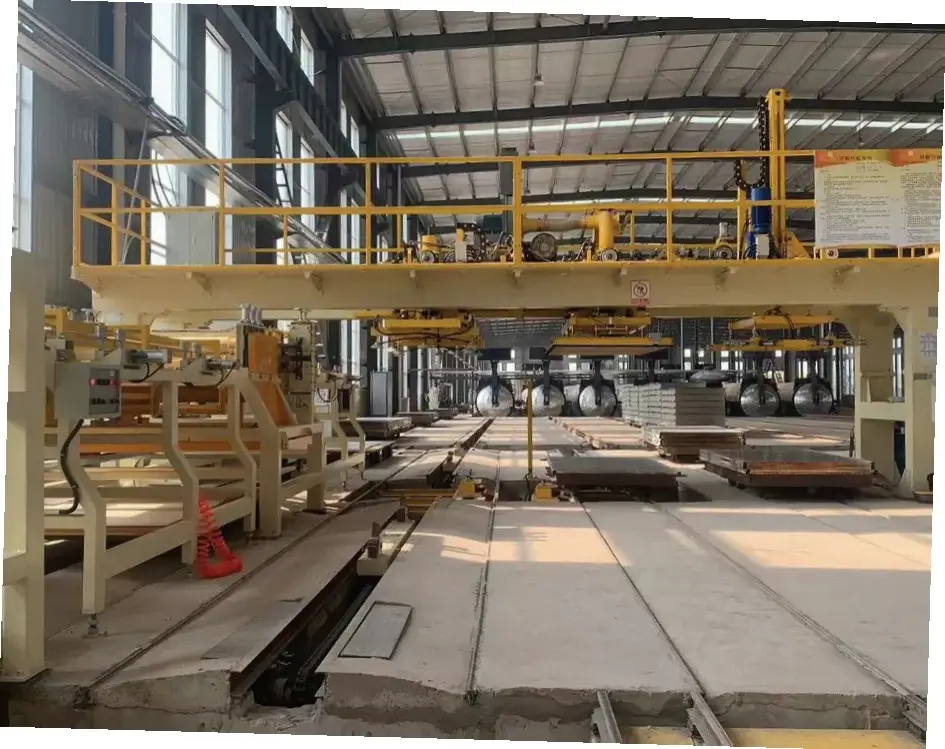
Zhonghong describes suction lifting and servo-controlled movement for its Stripping Machine. An offer should explain where the machine receives the board and how it presents the separated sheet to the next station. Where the board is still vulnerable, the receiving support and handling sequence require special attention. A factory acceptance test that shows the suction head moving freely is not necessarily a successful board-transfer trial.
For a plant selling two board lengths, the manufacturer should be asked to confirm which dimensions are included in its quoted configuration and which are subject to additional trial. The public equipment listing does not specify a fixed vacuum-cup pattern, payload or travel stroke for every project. Those details must be shown on the actual machine drawing and evaluated with representative board material. Neither a competitor’s machine model nor a photograph of a different installation can establish the supplied limits.
Plate recovery may need another conveying or handling package
The mould plate may be reused in an earlier part of production. Its return route can require a conveyor, trolley or other specified handling device depending on the process. Zhonghong lists Roller Conveyors and Shuttle Cars as separate machinery families, but neither is automatically included with a standalone stripping unit. Ask the supplier to identify who provides the plate-return connection, who verifies its compatibility and how it behaves if the earlier receiving station is occupied.
A factory experiencing plate shortages should record where plates accumulate during a normal shift. If the problem arises from the return route, faster suction lifting may not improve production. The supplier’s technical team can propose an integrated change only after tracing the plate’s actual path. That makes the machinery quotation relevant to a real operating constraint rather than to a general claim about reducing labour.
Factory manufacturing evidence should follow the proposed stripper design
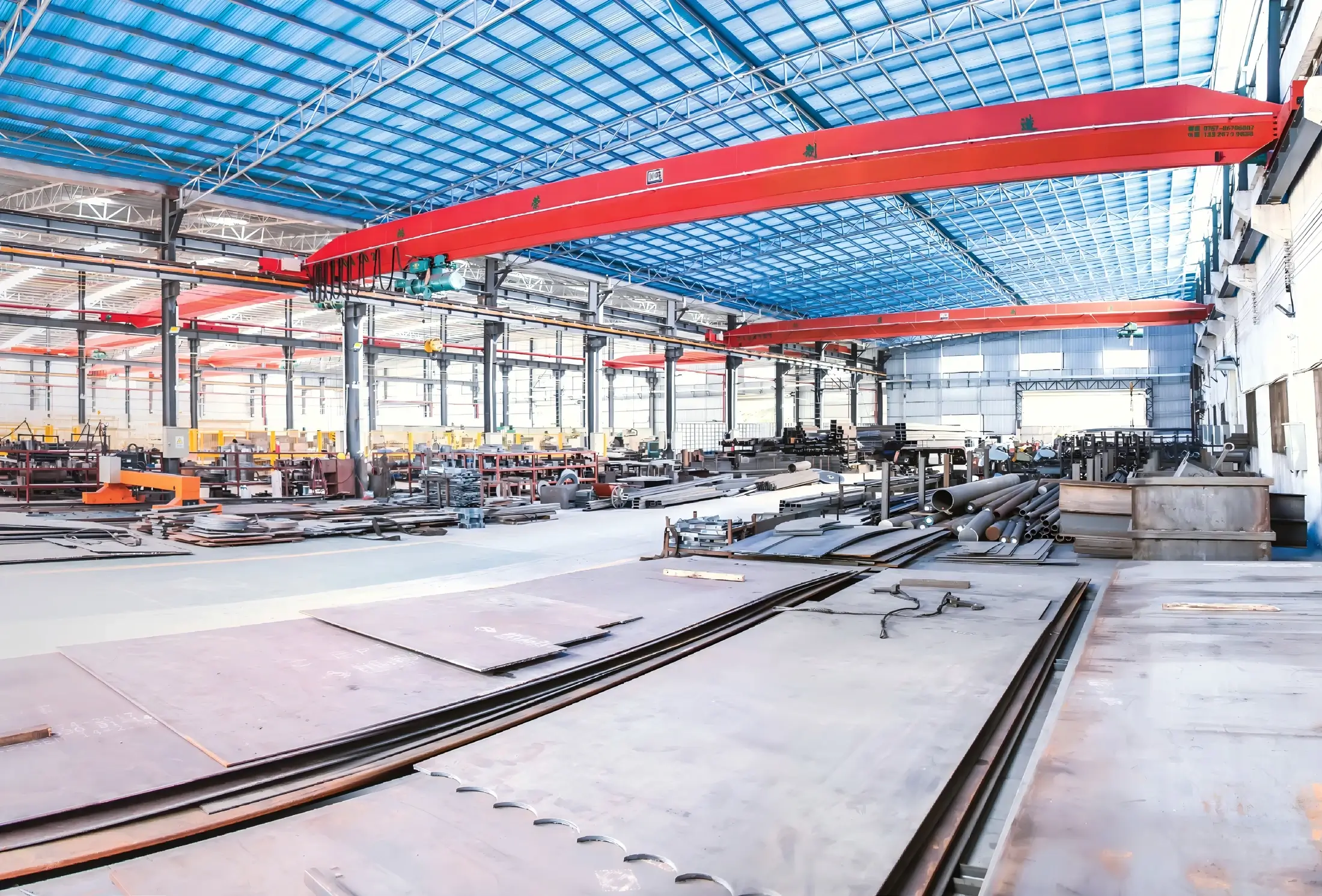
A supplier audit needs to distinguish verified manufacturing capability from marketing language. Zhonghong describes equipment manufacturing and electrical engineering services and supplies photographs of machinery assembly and fabrication. These are relevant to evaluating a manufacturer, but they cannot prove an unquoted stripper’s control programme, lifting capacity or quality inspection results. The purchasing team should request the final drawing, assembly description and evidence for the particular machine being ordered.
Suction components and servo travel need separate verification
Vacuum lifting addresses the pickup task, while servo-controlled movement positions the lifted material. The buyer should not accept the statement “servo vacuum stripper” as a substitute for understanding either function. Ask which assemblies perform pickup, how their working condition is checked, what product range the supplier has allowed for, and which movement or positioning functions can be demonstrated before shipment.
Imagine a unit whose carriage moves to the correct discharge position but cannot handle the customer’s approved board surface reliably. The movement test may have passed while the material trial remains unresolved. Conversely, a lifting arrangement that grips the demonstration sheet may still fail to transfer it to the retained conveyor’s elevation. These problems belong to distinct observations in the acceptance record. A good supplier will document what has actually been tested rather than calling all functions successful after one empty-machine demonstration.
Workshop photographs are not an equipment identity record
A workshop visit can show fabrication activity and assembly resources, but the buyer should be able to connect the observed machine to its approved order. Request the equipment schedule, revision number, included drives and controls, and the inspections to be witnessed. Where applicable, the information should identify which assemblies can be transported intact and which will require site assembly. This is particularly important for an international project using a separate installation contractor.
The public Zhonghong materials do not establish a universal lead time, guarantee of stocked spare assemblies or factory acceptance certificate for every stripper. An equipment supplier may discuss these commercial terms, but they must be documented for the actual order. A buyer gains more protection from an agreed inspection and delivery schedule than from an unsupported claim that all machines are identical to a previous customer’s installation.
Supplier scope becomes most important in a brownfield retrofit
Upgrading an operating factory can require more interface engineering than purchasing a machine for a new line. The stripping unit must receive material from retained equipment and deliver it to stations that may have older controls or a different layout. A supplier should ask for relevant as-built drawings, machine elevations and access for installation before finalizing fabrication. If site information is incomplete, a survey may be necessary and should appear as a defined service item.
The existing hydraulic press and stacker constrain the handoff
Zhonghong lists a Hydraulic Press for selected higher-density board routes and a Board Stacker for servo-controlled green-sheet positioning. If the old factory uses these machines around its stripping process, the new supplier should review what material each station sends and receives. A board stack prepared for pressing is not necessarily identical to a released board heading toward curing. The proposed layout should identify the exact sequence rather than use a generic turnkey diagram.
An operator replacing only the stripper may want to retain the press, plate supports and electrical infrastructure. The supplier should record those assumptions and explain whether modifications to them are included. A lower price for the main stripper could become a higher overall project cost if mechanical transfer and controls were excluded without explanation. That risk is specific to the installed process, not merely a general procurement concern.
Controls integration must survive an interrupted plate return
Zhonghong offers Electrical Control Cabinets and an Intelligent Line Control System using PLC coordination and production monitoring. A stripper order should state which station signals are supplied and how they interact with the retained machines. A practical test is what happens when the board discharge is ready but the mould-plate return route is blocked. Operators need an agreed and safe response that does not assume the two material streams are independent when they share the machine.
The supplier should describe whether the machine waits, where separated materials remain and which conditions permit another cycle. An HMI displaying the word “ready” has little value unless the plant knows what it means. The control contractor and machinery supplier should assign responsibility for every necessary connection, including field wiring and site commissioning tests. This is not automatically covered by the presence of a PLC cabinet.
- Stripping unit: identify the actual suction, guided travel and board-release assemblies.
- Plate return: state whether conveying and positioning after separation are included.
- Site integration: allocate field wiring, control handshakes and tests with the retained press or stacker.
Shipment, installation and after-sales obligations should be machine-specific
Part of supplier evaluation concerns what happens after the equipment leaves the workshop. Zhonghong describes packaging, delivery, installation, commissioning, training and spare-parts support as service categories. They can be useful for a stripping-machine project, but the actual order must identify which services are included. A supplier should not represent a universal export packing method or spare stock level as verified fact without project evidence.
Packing documents should identify the lifting structure and its control assemblies
The mechanical frame, suction-related equipment, drives and electrical cabinet may need different handling and protection during shipment. A packing list should identify the assemblies and link them to the approved drawings so the installer can recognize what has arrived. If movement tracks or other structural items require site assembly, that work should be allocated before the shutdown begins. Any lifting instructions should be supplied by the manufacturer for the actual equipment.
For a factory with a short available installation window, missing mounting details can disrupt production even when the main machine was delivered on time. The supplier’s documentation should include the information needed to prepare utilities and mechanical interfaces, and the owner should confirm that retained stations can be made available safely. A shipment described as complete is not necessarily installation-ready unless these items match the project schedule.
Wear parts and service access require an offered configuration
The plant needs to know how its particular suction, motion and control components are inspected and serviced. Ask for actual component references, operating instructions and appropriate maintenance access. It is not possible to promise a universal vacuum-seal life, spare-motor lead time or servicing interval using the equipment family name alone. The manufacturer must provide the information relevant to its supplied machine and the buyer’s operating conditions.
An operator who will retain older mould plates may also need advice about which parts of the new stripper interact with those plates. The service file should distinguish supplied components from the plant’s retained tooling. That information becomes important when a future board-size change requires another compatibility review. A generic spare-parts catalogue without equipment identity may be of limited use during an unplanned shutdown.

Choose the supplier by one successful, documented board-and-plate trial
Mechanical factory inspection and installed process acceptance answer different questions. The former can establish that agreed equipment was fabricated and certain functions operate. The latter must demonstrate a representative board and mould plate moving through their separate destinations within the customer’s actual line. The buyer should describe the accepted material condition and the receiving stations before the trial begins.
A comparable supplier proposal must state what is excluded
When comparing two offers, note which includes only the stripping unit, which also includes plate-return transport, and which includes controls and field integration. If an engineering contractor is supplying the wider production line, allocate these duties clearly in the contract. The stripping-machine process guide covers the material-flow problem, while Zhonghong’s engineering overview describes its wider service scope. Neither substitutes for a specific responsibility matrix.
A buyer purchasing for a new plant can verify the stripped board, return plate and downstream readiness as one designed sequence. A retrofit customer must additionally prove compatibility with retained equipment. The supplier worth selecting is the one that can demonstrate that actual path, document the components delivered and explain who is responsible when the receiving machine cannot accept another board.