


AAC Block Production Line Manufacturer: Demand Evidence from Workshop to First Block


The right AAC Block Production Line Manufacturer should be able to connect the buyer’s finished block specification to an identifiable factory equipment package and an acceptance plan. A supplier’s workshop photograph may show machinery fabrication, but it does not prove that a proposed AAC casting, pre-curing and cutting arrangement has been tested for the customer’s raw materials. Before ordering, define the intended block dimensions, destination market, material samples, required operating conditions and the work to be supplied from plant planning through production trials. Zhonghong identifies AAC Block & Panel Production Lines among its building-material solutions and describes equipment research, process engineering, machinery manufacture, automation, installation, commissioning and operator training. The company profile helps establish those service categories, but the detailed public machinery catalog mainly covers fiber-cement and calcium-silicate board equipment, so specialized AAC mould and wire-cutting systems need further supplier evidence.
Imagine a distributor who wants stable block dimensions to replenish long-term stock, while another investor wants a factory using locally sourced mineral materials. The first is likely to focus on output acceptance, cutting consistency and packaging. The second must resolve formulation suitability, casting behaviour and plant engineering before investing. Treating both projects as identical simply because both produce AAC blocks risks buying machinery around assumptions that have not been verified.
Start the AAC manufacturer audit with the finished block schedule
A useful product schedule defines the type of AAC masonry unit, its nominal dimensions, relevant performance class or market requirement and the share of production assigned to each product. The European AAC industry association explains that AAC manufacture uses mineral inputs and an aerating reaction, followed by mould casting, pre-curing, wire cutting and autoclave treatment. That sequence is industry context, not a verified configuration of a particular Zhonghong production line. A manufacturer evaluation should ask how its proposed equipment achieves the product the buyer will actually sell.
Block dimensions drive cutting equipment evidence
An AAC cutter works with a pre-cured, partially hardened cake rather than the continuous green sheet created by a fiber-cement Hatschek or Flow-on former. A buyer should therefore request the AAC cutting-machine drawings, proposed cutting sequence and the board or block product sizes for which trials can be performed. The company’s separately documented Waterjet Cutting System and cured-board cutter operate in its fiber-cement range; they should not be represented as verified AAC cake-cutting machines.
A distributor stocking several block formats may require a changeover plan, while a local producer focused on one high-volume size might favour an uncomplicated product schedule. Either way, the supplier should explain what happens to the cake when dimensions change and how material reaches the next stage. One demonstration clip of a cutter operating without an agreed product does not establish the consistency of the customer’s future blocks.
Performance standards belong to the block, not the supplier logo
Product standards for AAC masonry units can specify requirements and test methods for density, strength and other properties, depending on the destination and application. The buyer must identify the relevant local or international reference and have the final blocks tested accordingly. The machine manufacturer’s own quality inspection proves equipment workmanship, but does not by itself certify every block that might later be made from different materials.
For a contractor intending to supply regulated construction projects, this distinction is critical. A production line can be installed correctly yet remain unsuitable for a particular product specification without further process trials. The supplier should record the proposed formulation-development responsibility and the procedure for approving trial blocks. Certification or guaranteed test values should not be inferred from broad references to advanced machinery.
What workshop capability actually demonstrates manufacturing control?
Zhonghong’s supplied documentation identifies manufacturing facilities and technical services covering machine design, fabrication, electrical engineering and on-site installation. These are genuine supplier-evaluation topics, but a purchaser should tie them to the proposed AAC equipment rather than regard an unrelated machine photo as complete evidence. A factory inspection can verify fabricated assemblies and test records for the ordered machinery when available; it cannot replace a plant trial where the product’s aeration, cutting and curing depend on the customer’s materials.
Identify the moulds, mixers and lifting assemblies on the equipment schedule
A manufacturer proposing an AAC block line should provide a process diagram and a list of machines covering mineral preparation, mixing and casting, mould movement, pre-curing, cake removal, wire cutting, steam curing and finished-block handling. These are standard manufacturing functions described by the industry, not a claim that Zhonghong’s website has already documented a model for each. Every item should be identifiable by a drawing and intended role.
When a supplier includes a mould system, the buyer should ask who supplies the mould, side-plate or cake-support components required by the selected configuration. A cutting unit may require dedicated transfer equipment that is not obvious from the headline machine name. Asking for the full process schedule makes it possible to compare offers without assuming one supplier’s “automatic plant” includes every system present in another’s specification.
Factory inspection should not confuse fabrication with AAC process proof
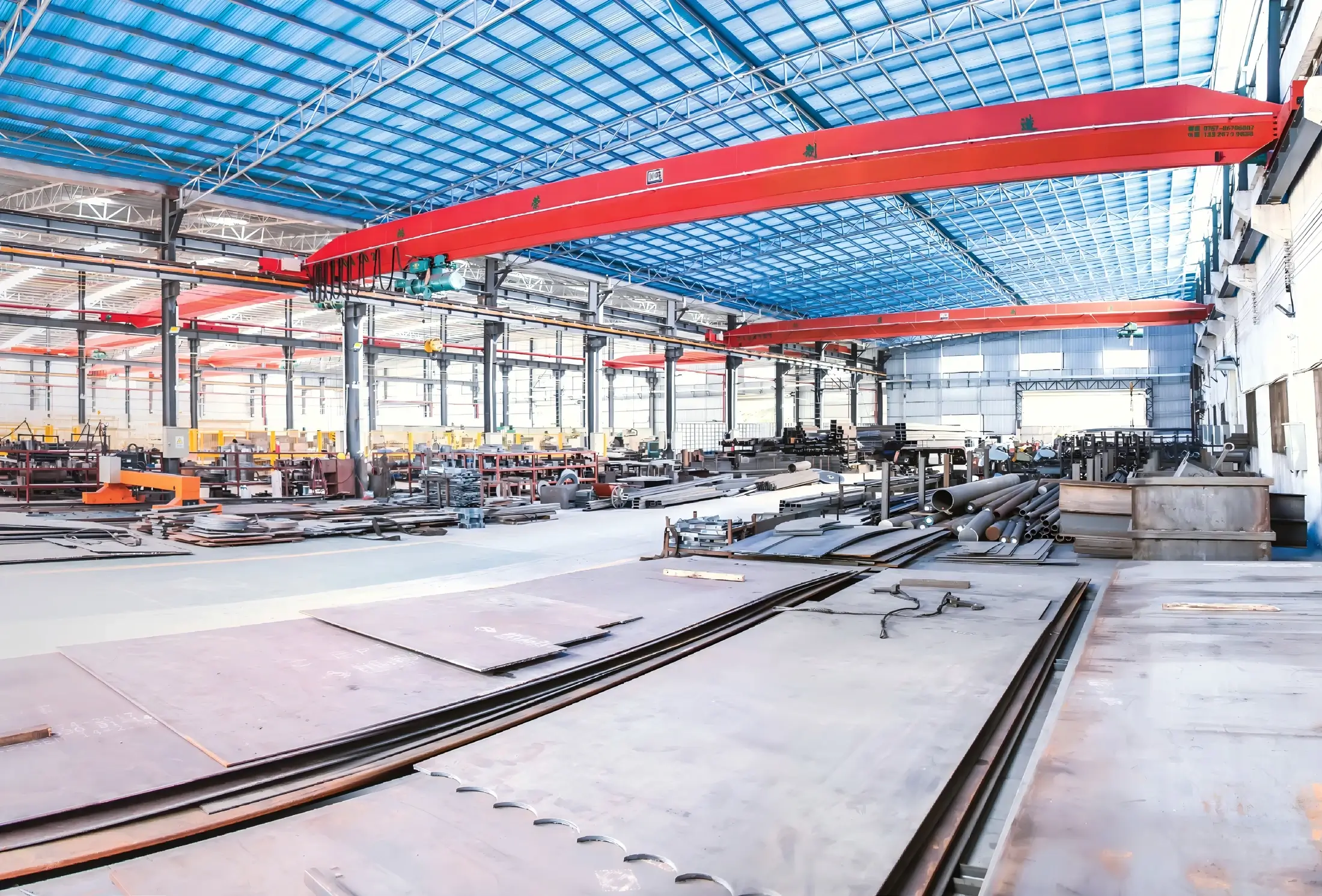
Industrial workshop photos show manufacturing activity, machine frames, electrical cabinets or transport equipment. They cannot establish a specific AAC block line’s rated output or product accuracy without the relevant acceptance evidence. Zhonghong publishes images of its engineering workshop and of general building-material machinery. A buyer may use these to discuss manufacturing resources, but should still request actual project drawings, inspection reports and test opportunities for the AAC equipment being purchased.
A well-designed factory acceptance plan separates mechanical checks, electrical function tests and operational tests that can be performed with representative material. Some casting or curing tests may only be possible at the customer’s installed plant. A supplier who acknowledges that difference is providing more precise evidence than one promising that a workshop demonstration has proved the final product in advance.
Supplier manufacturing evidence must include the mineral-to-cake process
The EAACA’s process summary describes grinding and dosing mineral inputs, mixing them with an aerating agent, casting the material into moulds, and waiting for sufficient green strength before cutting. These operations form a connected process. The buyer should establish who will test local raw materials, confirm the process assumptions and coordinate the mixing and casting equipment. This is especially important when the planned factory uses materials that differ from reference trial inputs.
Raw-material testing determines what the mixing supplier can guarantee
Zhonghong describes laboratory work in raw-material testing and product development as part of its technical offering. In its fiber-cement equipment portfolio it lists Ball Mills, Automatic Dosing Systems and Slurry Storage Tanks. Those are documented examples of material-preparation and measurement functions, but their actual suitability for an AAC recipe needs engineering confirmation. The company material does not provide a universal AAC mixing formulation or aluminium-paste dosing specification.
A new plant investor using local silica-bearing feed should plan representative material sampling before treating a process design as final. If the aeration response and pre-curing condition change, the downstream cake-cutting method may be affected. The manufacturer should identify the studies and operating assumptions required before promising output. An accurate dosing mechanism is valuable, but it cannot eliminate the need for appropriate process development.
Pre-curing and cake handling demand a controlled sequence
After casting, AAC material expands and gains sufficient green strength for subsequent work. The pre-curing arrangement and cake-handling machinery must be designed for the intended process. A supplier should describe when a mould is ready to move, how the cake is supported during transfer and which station is responsible for release to cutting. The current Zhonghong public pages do not specify an AAC tilting hoist, mould release arrangement or dedicated pre-curing room size, so those details belong in the supplier’s supporting documents.
Suppose the casting operation consistently produces material faster than the cutting section can receive it. An integrated manufacturer should explain how this imbalance is handled without subjecting green cakes to unsuitable waiting or movement. A proposed line-capacity figure means little unless the operating sequence includes these transitions. For a project with several block dimensions, product changes may also affect cutting setup and transport.
The autoclave package must be assessed with the real AAC load
Steam-pressure curing is central to the industry AAC process. Zhonghong lists an industrial Autoclave Curing System in its documented fiber-cement and calcium-silicate equipment range. This establishes a relevant machine family but does not demonstrate the exact AAC vessel arrangement, process recipe, capacity or applicable pressure-equipment approvals. The buyer should ask for the dedicated AAC autoclave design, proposed carrier arrangement and project-specific capacity model.
Load geometry and curing cycle are different commercial variables
A nominal vessel size may help define available space, but it cannot alone prove the number of accepted blocks a factory will produce. The buyer needs information about the block dimensions, support arrangement, transfer equipment and an approved curing process. Laboratory or industry example temperatures and cycle durations do not automatically transfer to a new plant with different raw materials. The supplier must distinguish assumptions from performance confirmed by trials.
The manufacturing schedule should also include loading and unloading operations. A factory with efficient casting and cutting can still suffer interruptions if curing loads are not prepared and moved at the required rate. The engineering team needs a diagram showing how cakes become curing loads, how equipment moves them, and where finished material proceeds for separation and packaging.
Installation and product acceptance should be scheduled separately
Zhonghong describes on-site installation, commissioning, staff training and production support. Those services are valuable to a plant owner, but a contract must identify which apply to its order, the required local utilities and who supplies the raw materials for product trials. Mechanical installation of an autoclave and related conveyors is not equivalent to validated operation of the complete AAC manufacturing process.
For international projects, the buyer should also ask what documents address local safety obligations and regulatory requirements. The available website information does not establish that a particular AAC vessel has one specified certification or a universal export approval. These are project-specific matters requiring documentary evidence, not marketing extrapolation from another equipment line.
What should appear in the manufacturer handover file?
A useful handover should identify which machines were supplied, the accepted drawings, what inspections were performed and the status of full-process trials. For AAC, a project may depend on an equipment chain from mineral preparation and casting to pre-curing, cutting, autoclaving and finished-block packaging. The manufacturer should also state the controls and training provided. This is a product-and-process record, not merely a collection of equipment brochures.
Controls tests should reproduce casting-to-cutting interruptions
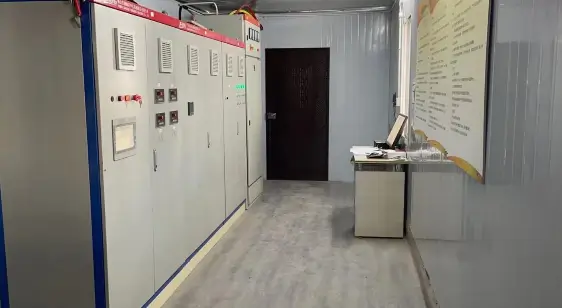
Zhonghong publishes Intelligent Line Control Systems and Electrical Control Cabinets in its wider machinery range. In an AAC project, the purchaser should ask whether the offered controller coordinates the casting station, pre-curing release, cutting readiness and transfer into curing. Those are potential functional requirements, not claims that a fully engineered AAC-specific PLC program is already documented by the company.
One useful site test concerns a cake that is ready for cutting while the cutting area is unavailable. The operators should know what the system indicates and which safe recovery process applies. A factory trial with the intended material can reveal interface problems that empty-machine tests cannot. A supplier comparison based only on a controller brand or a screen photograph would miss that operational issue.
Shipping records and spare parts should match individual AAC assemblies
A mould or cutting-frame assembly has different handling and maintenance needs from an electrical cabinet or autoclave component. The supplier should prepare packing lists, identification references, manuals and spare-part information for the actual machines. Zhonghong’s service scope includes packaging, transportation, equipment upgrading and spare parts, but the website does not publish fixed quantities, lead times or stock levels for AAC projects. These commercial terms must be agreed for the specific order.
The AAC block production-process article lays out the stages that any proposed line must cover, while Zhonghong’s engineering and support overview provides context for project coordination. Neither replaces acceptance drawings for the particular machines. A manufacturer becomes a credible procurement choice when the buyer can inspect the proposed equipment scope and see how real block trials will close the remaining technical questions.