

Flow On Fiber Cement Production Line Supplier: Define the Wet-End Scope

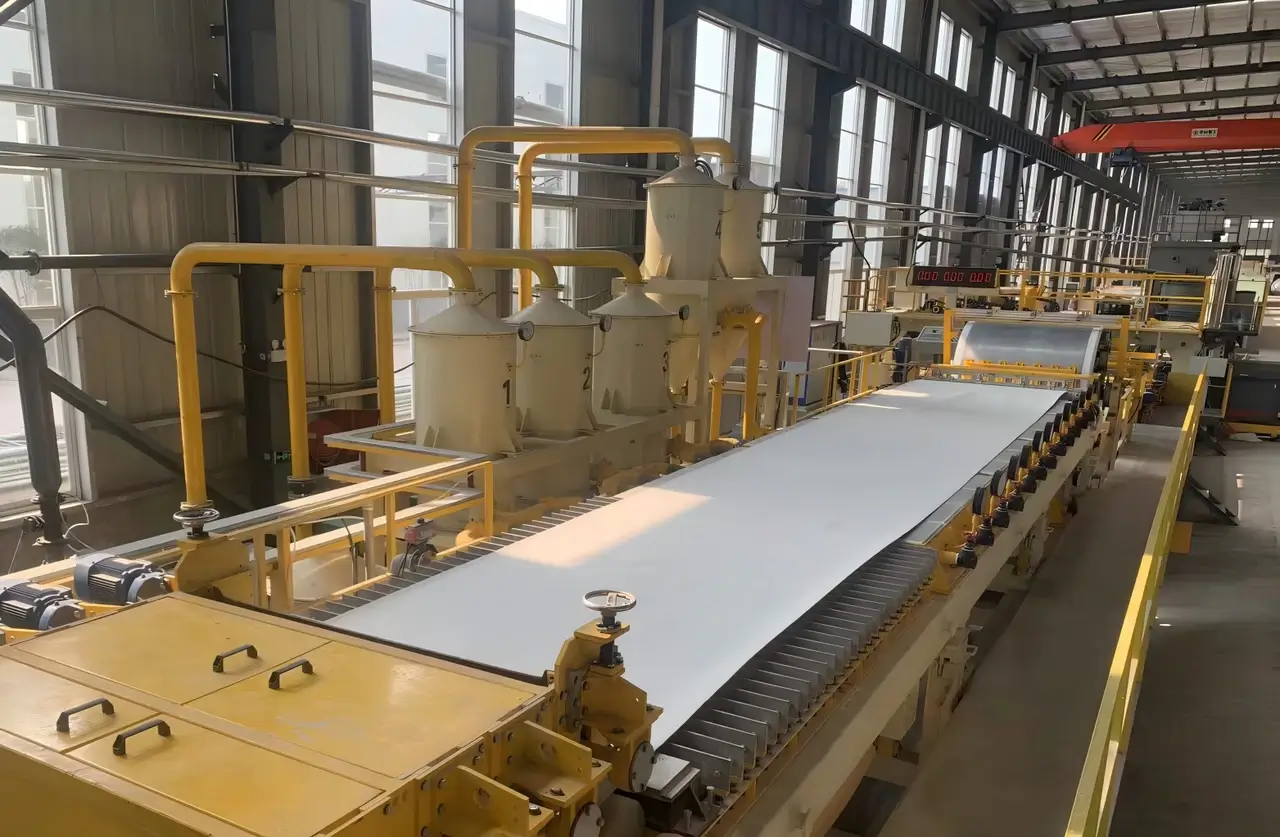
When choosing a Flow On Fiber Cement Production Line Supplier, a plant investor should ask where the wet-end package begins and ends. A flow-on former distributes prepared slurry to form a continuous sheet, but a working factory also needs suitable material supply, water removal, green-board sizing, transfer into the next station and a curing and finishing route. A supplier quotation that names only the headbox leaves crucial operations uncertain. Zhonghong’s published range includes Automatic Dosing Systems, Slurry Storage Tanks, Flow-on Forming Machines, Waterjet Cutting Systems, servo-controlled Board Stackers, Hydraulic Presses, Autoclave Curing Systems, finishing equipment and PLC-based controls. The equipment directory identifies the functions offered; the buyer must require project-specific connections between them.
Consider an investor aiming to make a familiar flat sheet and another wanting several product sizes on the same line. The first needs evidence that one approved board can move through the wet end without damage. The second must also understand how a dimension change affects cutting, stacking and curing loads. Neither should rely on a claim that all parts of the factory automatically operate at the former’s nominal speed.
The flow-on supplier must identify where prepared slurry becomes a wet sheet
The established flow-on concept involves distributing slurry onto a forming surface and removing water until the material can proceed through the next operation. Industry technical documents discuss various ways of supplying and dewatering slurry, but those descriptions are not proof that Zhonghong uses a particular proprietary vacuum, press or headbox configuration. The offered machine is described on the company’s site through controlled slurry distribution, dewatering and thickness control. The customer should ask for the actual design and the board and raw materials used to validate it.
Automatic dosing and slurry storage supply different kinds of stability
Zhonghong’s Automatic Dosing System meters ingredients to match the required production formula and slurry concentration, while its Slurry Storage Tank holds prepared material between process stages. They should be connected in the engineering drawing to the forming machine’s specified inlet. The buyer needs to know which party defines the formulation, which instruments are included and how a loss of feed is handled during production. The existence of a storage tank cannot guarantee that every incoming formulation is suitable for the former.
In a factory planning to use local mineral inputs, a Ball Mill may form part of the preparation process. Its role depends on the material being purchased and the required preparation. A buyer should not approve the former without establishing whether material testing remains necessary. If a supplier offers the forming machine but excludes upstream preparation, that boundary should be specified: who supplies the slurry, in what agreed condition and where responsibility passes between machines?
Dewatering is a process decision, not an accessory list
Flow-on formation must remove sufficient water to create a wet sheet suitable for subsequent handling, but its process design should be reviewed against the actual board and material. Technical references describe alternative arrangements using permeable carriers, suction or pressure; they do not establish which equipment is included in the particular Zhonghong offer. An investor should ask the supplier to explain how water leaves the wet layer, how the material behaves after that step and which conditions will be checked during trials.
Water removed during forming may create additional site requirements for handling, collection or treatment depending on the installed configuration. The supplier should distinguish equipment supplied with the line from site infrastructure that the plant owner must design. A process diagram that shows only slurry entering and a finished sheet leaving cannot answer the operational question of where removed water and retained solids go. This is a legitimate point to resolve before civil construction or utility planning.
After the Flow-on former, the board must survive several material transfers
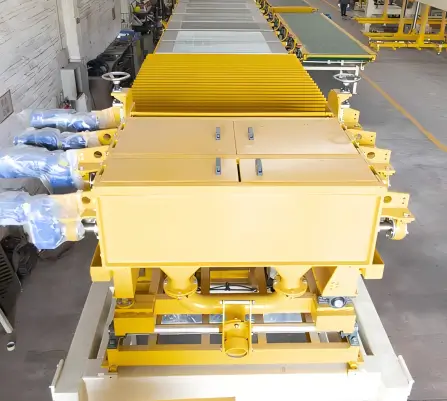
The wet sheet remains an intermediate product. Zhonghong lists high-pressure Waterjet Cutting equipment for sizing green boards and a Board Stacker for servo-controlled handling. The supplier’s complete-line proposal needs to explain how these operations connect to the forming section and how the next machine receives the board. A favorable demonstration of a headbox is not enough if a cut sheet cannot be transferred consistently.
Waterjet cutting has to preserve the actual board geometry
A green-board cutter is designed for a different task from a machine that trims cured boards to their final dimensions. In the site’s range, these are separate equipment families. The buyer should identify the intended cut size at the wet stage, what supports the sheet through the operation and how the resulting board is handed to the stacker. If the commercial product range includes more than one dimension, the engineering response should cover realistic changeovers rather than only a demonstration at one ideal size.
A plant producing long flat sheets may have different support concerns from one forming shorter boards. The process design should show those conditions at transfer points, without inventing a universal maximum length or guaranteed yield. If a quoted line uses a common set of equipment for different boards, the supplier needs to state which product sizes have been evaluated and which are still proposed assumptions.
Servo positioning is valuable only when the sheet can be supported
The Board Stacker is described as positioning green boards with servo-controlled handling. That explains a machine function, not the complete handling result. The buyer should ask what the stacker receives, whether support plates or other carriers form part of the route and how an interruption is managed. A machine can make accurate positioning movements while the material remains vulnerable to an inappropriate transfer sequence.
Suppose the next process station is occupied while the former and waterjet cutter are still running. The line needs a coordinated control response that addresses wet boards already in movement. Ask which events cause an upstream stop, what operators will see and how the system restarts. These are commissioning questions to be agreed with the line supplier, not assumptions inferred from the word “automatic.”
Pressing, curing and finishing must be justified by the selected fiber cement board
Zhonghong offers a Hydraulic Press for production routes involving certain higher-density boards, a Stripping Machine for removing boards from mould plates and an Autoclave Curing System for steam treatment of applicable fiber-cement and calcium-silicate boards. These machines perform distinct tasks and should not automatically be added to every flow-on line. The chosen formulation, green-board condition and finished-product requirements determine the appropriate route.
Press and stripping machines have different material interfaces
If the proposed board requires pressing, the supplier should describe the stack entering the press and what happens to it afterward. A stripping machine, by contrast, is designed to separate boards from mould plates using suction lifting and servo-controlled travel. A project that does not use the corresponding mould-plate route may not need that arrangement. Including unnecessary machines can create extra capital and layout demands without improving the intended product.
For a retrofit, the question can be more complex: an older press or stripping line may already exist, and the new flow-on forming section has to deliver material it can accept. A supplier should request drawings of the retained equipment and identify any required modifications before finalizing its own machine interfaces. This separates the cost of replacing the former from the cost of making the complete line operate.
Curing loads can determine usable output despite steady wet formation
Autoclave curing operates on prepared loads and project-specific treatment conditions rather than simply matching the instantaneous movement of a continuous sheet. A buyer should define how boards are arranged, moved into and out of curing and verified afterward. The site’s Board Splitter handles post-curing separation of sheets and pads, while Shuttle Car equipment can transfer trolleys between stations. Their actual use depends on the proposed factory design and should appear on the same material-flow drawing.
It would be misleading to apply a universal steam-curing cycle or load capacity to every fiber-cement board. Treatment depends on materials, the approved board route and relevant testing. If the line supplier quotes a complete plant output, the calculation should state the proposed curing and downstream assumptions, not merely the machine rate at the flow-on former.
The last cutting and sanding stations define the finished product
A site selling visible wall panels may require more surface preparation than one making an interior substrate. Zhonghong’s Sanding Machine is intended for cured-board finish and thickness work, its Grinding & Chamfering Machine for edge preparation, and its Board Cutting Machine for final sizing. The supplier should explain how those stages follow curing and where the finished board is inspected. The presence of a waterjet cutter at the wet stage does not eliminate the need to discuss downstream dimensions.
A first-time plant investor should decide which finishing requirements apply to its launch product. Adding every finishing option may create unnecessary cost; leaving out the treatment customers require can leave finished boards commercially unacceptable. The choice should come from product samples, market requirements and a clear equipment description, not a package promoted as universally suitable.
What documents should follow a Flow-on production-line shipment?
A supplier offering production-line machinery and engineering support should provide project-relevant information from manufacturing through installation. Zhonghong describes machinery production, automation integration, commissioning and training services. Those categories establish the types of work it discusses publicly, but the exact drawings, tests, packaging methods and site work included with a particular order must be agreed before shipment.
Factory acceptance and site product trials answer different questions
An inspection at the equipment workshop can verify manufactured assemblies, identification, movement functions and selected electrical checks. A full trial with the buyer’s planned slurry and finished board may need the actual factory, curing equipment and handling layout. The supplier should describe what can be observed before shipment and what remains conditional on the materials and facilities provided at the site. A workshop demonstration of machine movement is not equivalent to acceptance of the finished board.
If the target product is an exterior fiber-cement flat sheet, ASTM C1186 is one example of a product standard that may be relevant after determining its scope and application. Its existence does not mean a particular machine is certified or that any output will automatically comply. Product acceptance must be based on agreed testing of the intended board, while equipment acceptance checks the machinery and its specified functions.
Electrical-control interfaces belong in the shipment and commissioning record
Zhonghong’s Intelligent Line Control System uses PLC functions and production monitoring; Electrical Control Cabinets provide control and protection for the installed production line. A proposed flow-on package should identify what sensors, machine states and operator displays are included. In particular, the supplier should state whether the in-line Thickness Measurement System is used for observation alone or has additional controls explicitly specified in the order.
When the new line is connected to existing factory equipment, confirm who supplies the field wiring and signal descriptions. Without that information, a cabinet can arrive correctly assembled but remain unable to exchange the signals needed for coordinated production. A useful handover includes machine drawings, control descriptions and the tests planned for normal operation and interruptions.
Machine packaging should match the actual equipment being transported
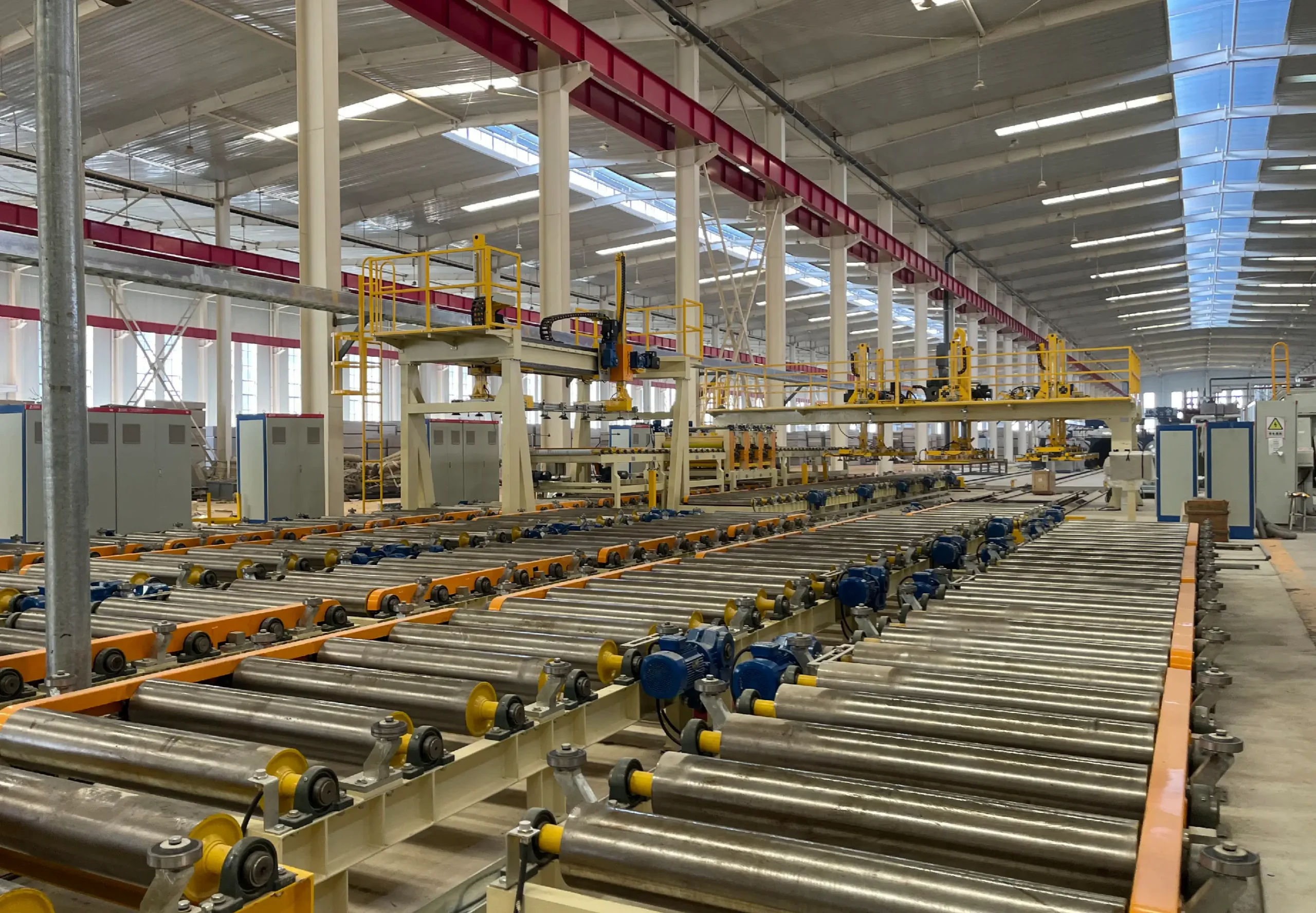
A forming machine assembly, long conveying components and an electrical cabinet present different shipping and lifting questions. The supplier should prepare the real packing list and installation references for the order, identifying what can arrive assembled and what requires site assembly. The available product pages do not establish one fixed international packing method or delivery period for every flow-on project, so those claims should be confirmed rather than borrowed from general industry practice.
Installation training also needs to reflect the equipment actually delivered. Operators should understand the approved slurry conditions, forming observations, green-board handling, curing handoffs and recovery from a safe controlled stop. A generalized description of “training included” is too vague unless it identifies the scope and responsibility for the production equipment in question.
Accept the Flow-on line with a real board and a documented material path
Before signing off, the buyer should be able to follow the intended board from prepared material through the flow-on headbox, dewatering, green-board cutting and stacking, curing and finishing. That path identifies which equipment is included, what services remain open and what product data the commissioning team must verify. The site’s Flow-on forming-machine analysis addresses the forming device itself, while the equipment bottleneck guide examines interruptions that can limit usable output even when the former is working.
For an existing factory, the acceptance plan should name the retained systems and test their handoffs with the new flow-on equipment. For a greenfield site, it should connect machine functions to a complete material-flow and utility plan. The credible supplier response is the one that makes those boundaries inspectable against the buyer’s own board—without assuming the product will meet a promise simply because the forming method is continuous.